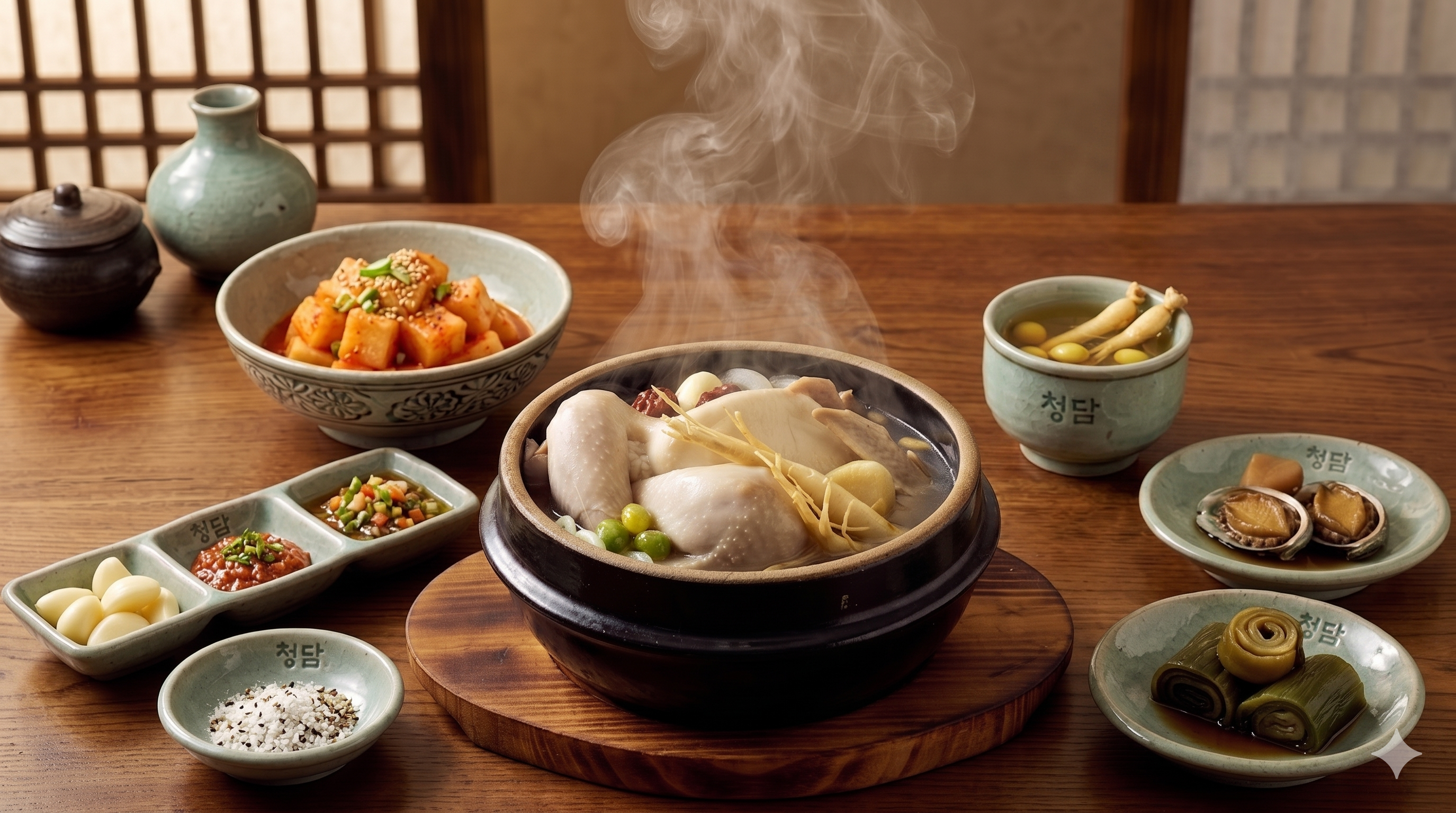
삼계탕 · Samgyetang — ginseng, whole chicken, glutinous rice. One pot. One ritual.
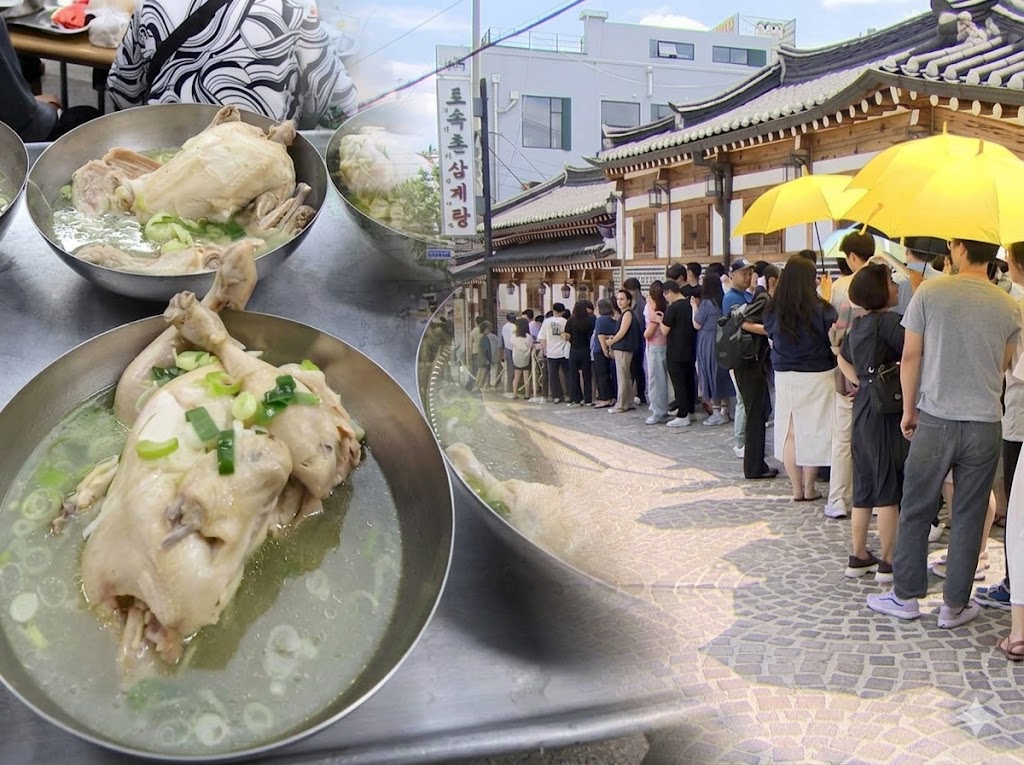
처음 듣는 사람은 말합니다. "더운 날에 왜 뜨거운 걸 먹어?" 합리적인 질문입니다. 에어컨 없던 시대, 냉면도 있고 화채도 있는데 굳이 펄펄 끓는 국물을. 하지만 한국인의 여름 논리는 정반대입니다. 더우면 더 뜨거운 걸 먹어야 한다. 이걸 이열치열(以熱治熱)이라고 합니다.
반전이 하나 있습니다. 이 음식의 원래 이름은 '계삼탕'이었습니다. 닭(계)이 주인공, 인삼(삼)은 조연. 그런데 1960년대 인삼 재배가 산업화되고 값이 오르면서, 사람들은 인삼을 더 귀하게 여기기 시작했습니다. 그러다 주인공이 바뀌었습니다. '삼계탕' — 이제 인삼이 이름의 앞에 섭니다. 닭이 인삼을 모시게 된 것입니다.
지금도 복날이 되면 한국인의 스마트폰에는 알람이 울립니다. 초복, 중복, 말복. 삼계탕 집 앞에 긴 줄이 생깁니다. 직장인들은 점심시간에 뛰어갑니다. 가족들은 일부러 시간을 맞춥니다. 한국인에게 삼계탕은 음식이 아닙니다. 여름을 버티는 의식입니다.
The question is reasonable: why would anyone eat scalding soup in the middle of summer? Korea has cold noodles. Korea has iced desserts. And yet on the hottest three days of the year, the lines are longest at the samgyetang restaurants. The Korean logic runs the opposite way: when it's hot outside, heat up the inside too. This is called iyeolchiyeol — fight fire with fire.
Here's the twist in the name. The dish was originally called gyesamtang — gye for chicken (the star), sam for ginseng (the supporting role). Then in the 1960s, ginseng cultivation became an industry, prices rose, and Koreans started treating it as the more prestigious ingredient. The name flipped. Samgyetang. Now ginseng leads. The chicken became the supporting cast.
Every summer, three dates appear on the Korean calendar: Chobok, Jungbok, Malbok — the beginning, middle, and end of the hottest stretch. Office workers sprint to samgyetang restaurants at lunch. Families make plans around it. For Koreans, samgyetang isn't just food. It's how you officially survive summer.
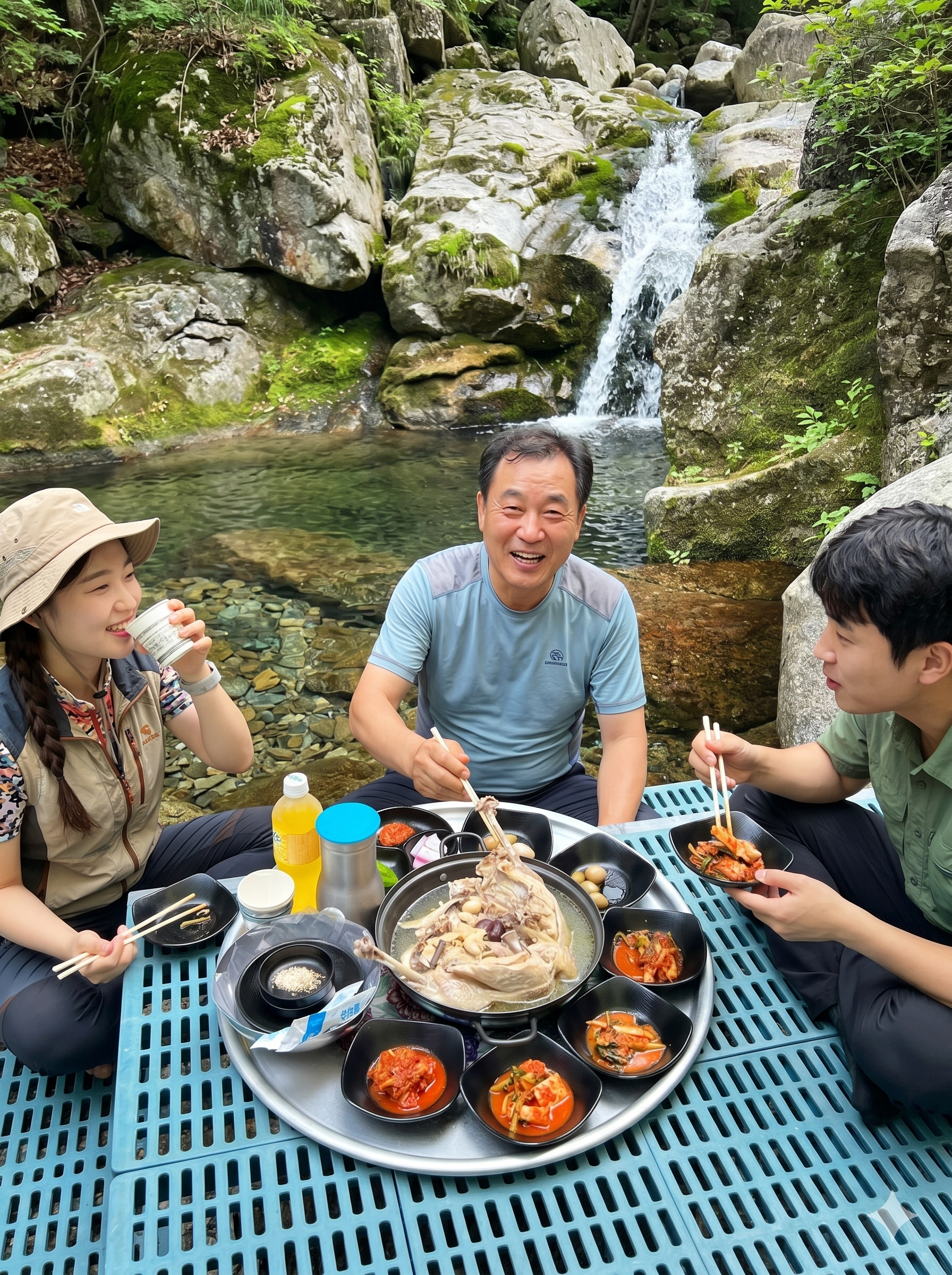
Seventy percent of Korea is mountains. Where there are mountains, there are valleys. Where there are valleys, there are samgyetang restaurants built right beside the water. Not a menu item. A state of mind.
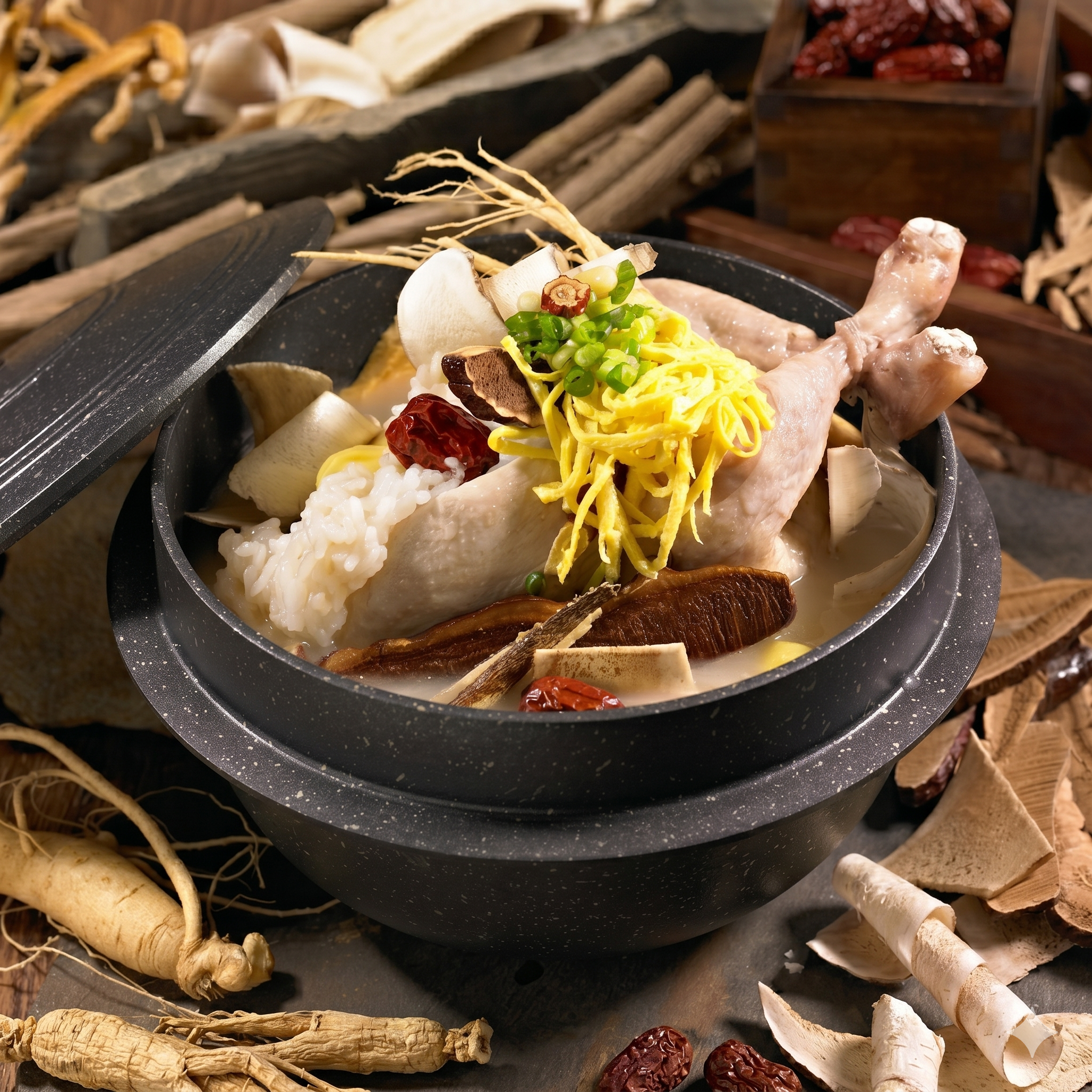 속 채우기 · Stuffing
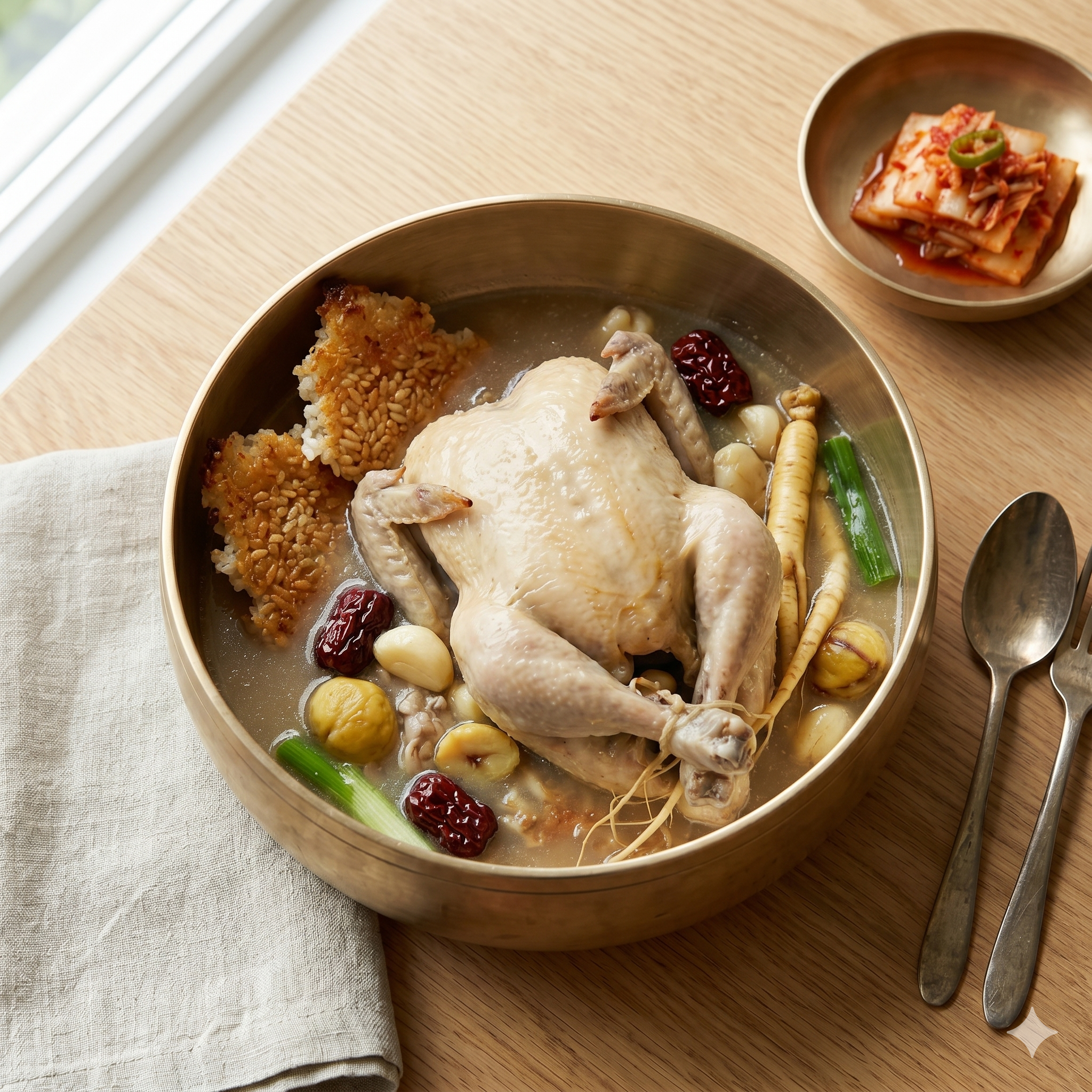 누룽지 · Nurungji
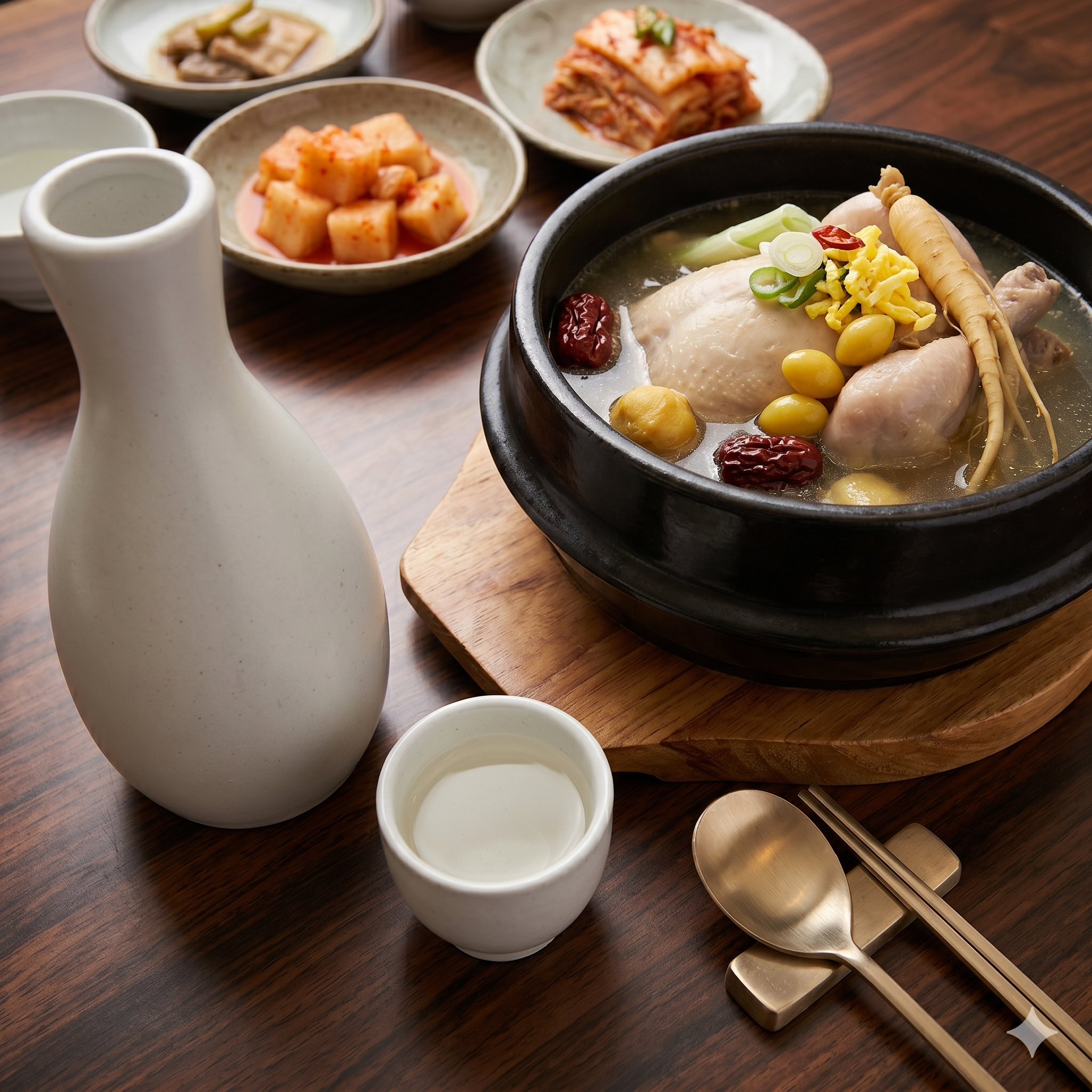 인삼주 · Insam-ju
속 채우기 · 누룽지 변형 · 인삼주 — three things first-timers don't expect
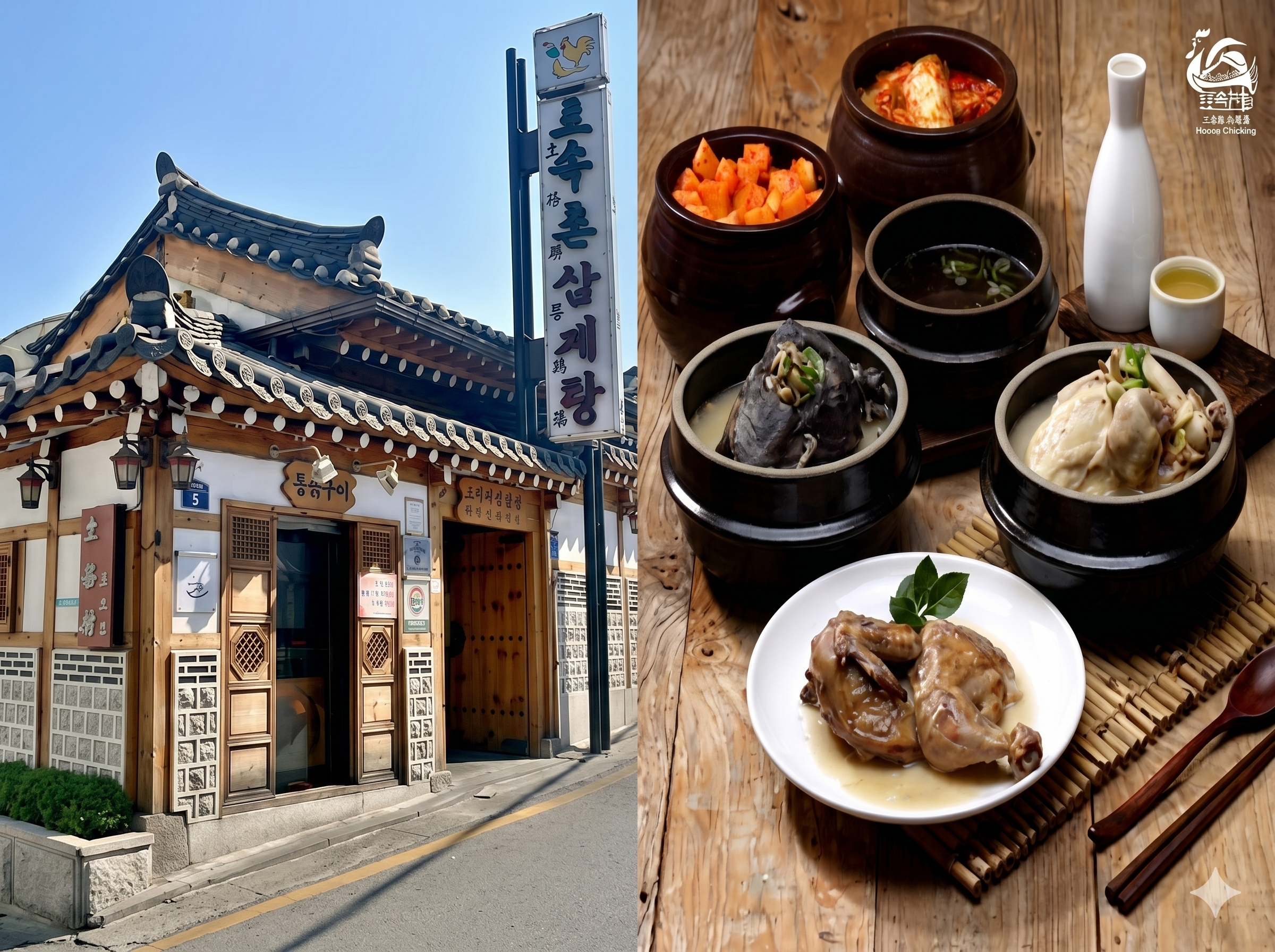
The most internationally recognized name in samgyetang. Running since the 1980s, using domestic herbs and free-range chicken. The wait is real — use it to walk the Gyeongbokgung stone wall.
Sixty years old and Michelin-noticed. The premium bowl with wild ginseng and abalone is worth the splurge.
Almost entirely local crowd. Clear, clean broth, no gamey aftertaste. Go on a weekday.
Next up → Spicy Stir-fried Octopus. Korea stir-fries its octopus alive. There's a reason.
Eating samgyetang on Boknal isn't optional for Koreans. It's proof you survived summer the right way.