갈비 vs 갈비찜
Galbi-gui & Galbi-jjim
같은 뼈 · 두 개의 철학 · Same Bone, Two Destinies
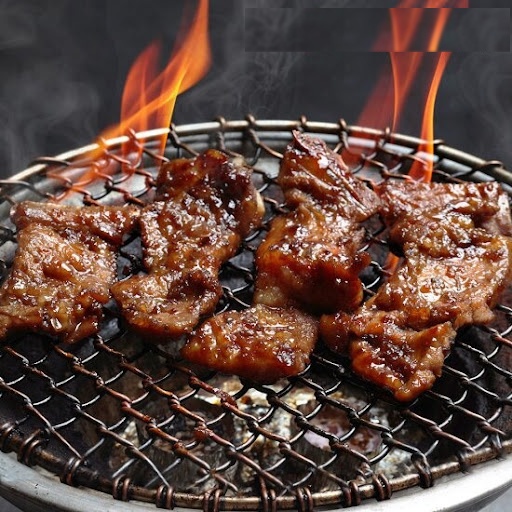 🔥 갈비구이
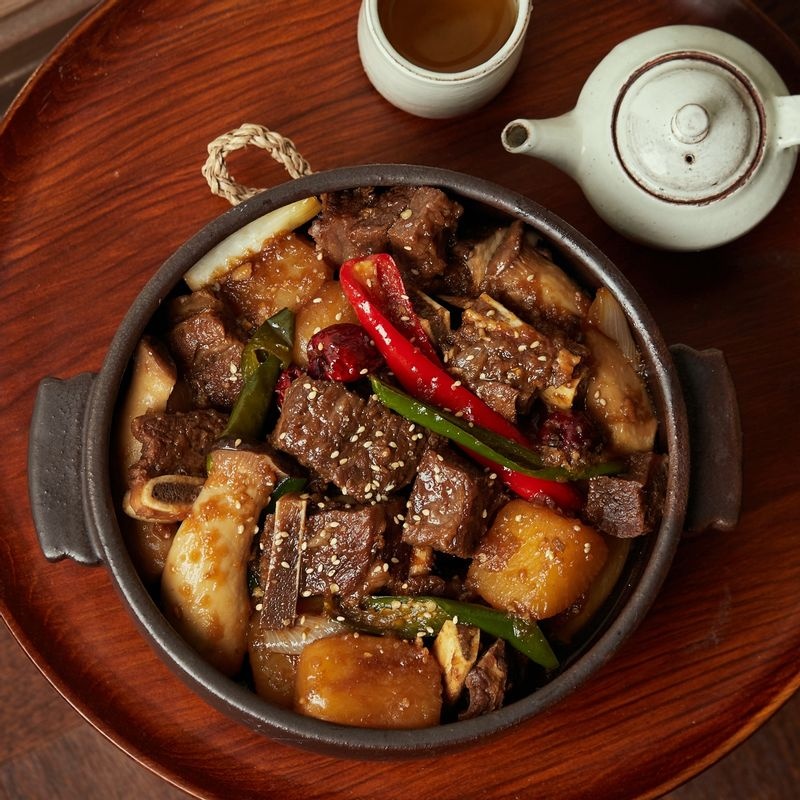 🍲 갈비찜
🍲 갈비찜
왼쪽: 숯불 위 갈비구이 · 오른쪽: 대추·밤이 들어간 갈비찜
"Same bone. One goes on fire. One waits for hours. The results couldn't be more different — and both are delicious. — Galbi."
같은 뼈입니다. 하나는 불 위에 올라가고, 하나는 몇 시간을 기다립니다. 결과는 완전히 다르고, 둘 다 맛있습니다. — 갈비 이야기.
Everyone thinks they know what galbi is. Korean BBQ, charcoal grill, the smoke that follows you out of the restaurant and into tomorrow's shirt. You're not wrong — but you're describing one version of a much longer argument.
Galbi-gui (grilled ribs) and galbi-jjim (braised ribs) start at the same place: the ribs of a cow or pig, same bones, same butcher. What happens next splits them into two completely different philosophies. One goes straight onto fire — high heat, fast char, eaten the moment it's ready. The other goes into a pot with soy, garlic, chestnuts, jujubes, and ginger, and doesn't come out until the collagen has surrendered completely. One is immediacy. The other is patience.
Here's the reversal: galbi-jjim is the royal one. Records from the Joseon court list it as ujeopjeungbang — ribs braised in the palace style. It appeared on royal banquet tables, on ceremony feast spreads, on the first birthday tables of children in wealthy families. Galbi-gui has humbler origins — Suwon's charcoal galbi became famous during King Jeongjo's reign when the city became a hub of cattle trade, and the grilled version spread as street-level food. One descended from the throne. The other came up from the market. And yet — walk into any upscale Seoul restaurant today and the grilled version costs more per portion. History is a strange accountant.
갈비구이와 갈비찜은 같은 곳에서 출발합니다. 소나 돼지의 갈비뼈, 같은 부위, 같은 정육점. 그 다음부터 완전히 다른 철학으로 갈라집니다. 하나는 불 위에 올라가 바로 먹습니다. 하나는 간장, 마늘, 밤, 대추, 생강과 함께 냄비에 들어가 콜라겐이 완전히 녹아내릴 때까지 기다립니다.
반전이 있습니다. 갈비찜이 왕실 음식입니다. 조선 궁중 요리서에 '우협증방(牛脇蒸方)'이라는 이름으로 기록돼 있고, 잔칫상, 수라상에 올라갔습니다. 갈비구이는 정조 임금 시절 수원이 우시장 거점이 되면서 숯불갈비로 유명해진, 시장에서 올라온 음식입니다. 하나는 왕실에서 내려왔고, 하나는 시장에서 올라왔습니다. 그런데 오늘날 서울 고급 식당에서는 구운 갈비가 더 비쌉니다.
숯불과 불꽃 — 갈비구이의 본질
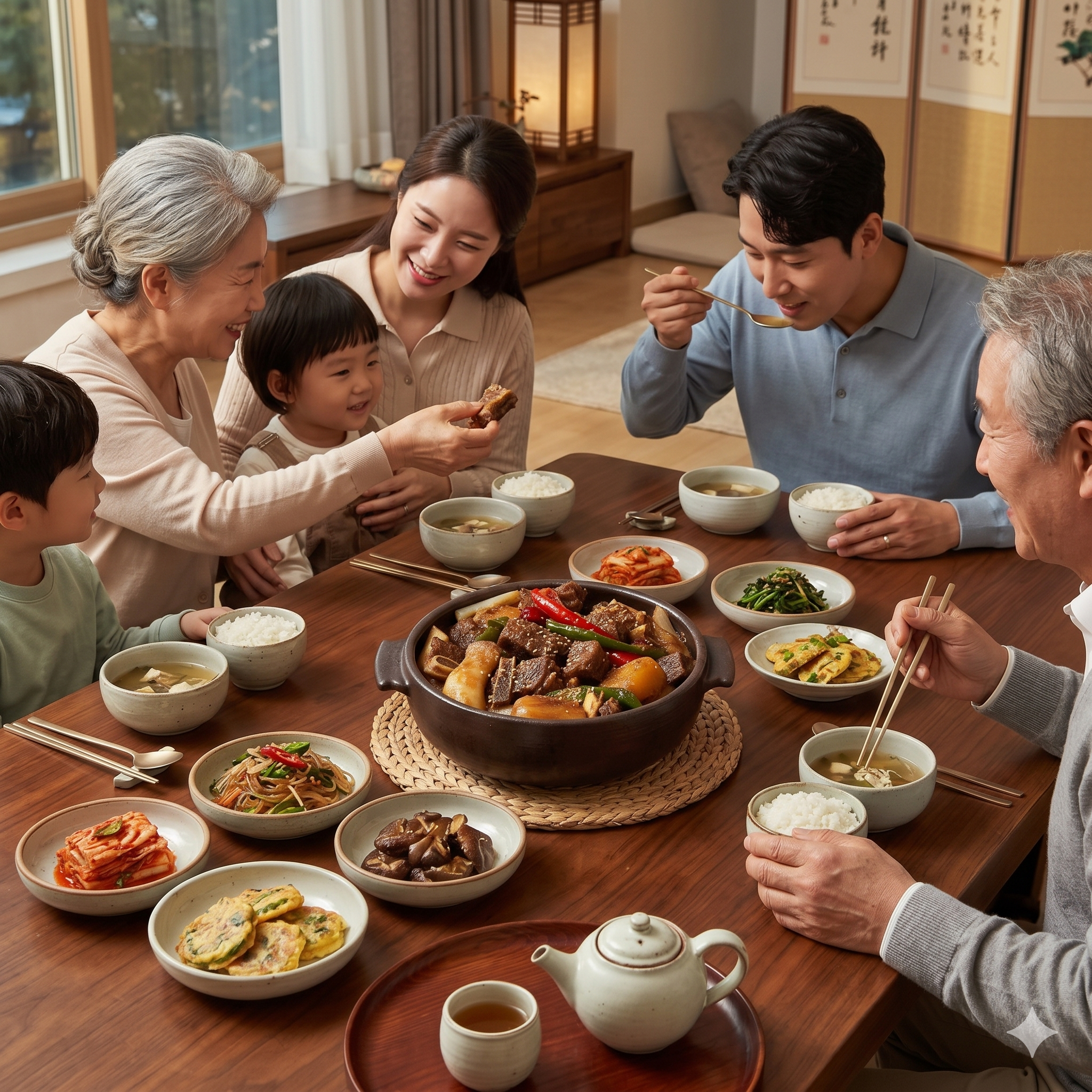
"The royal version never crossed the border. Only the fire did."
Most foreigners who love Korean food have met only one version of galbi. K-BBQ crossed borders as galbi-gui — the fire, the smoke, the table grill experience. Galbi-jjim stayed home. It lives on holiday tables, in grandmothers' kitchens, at birthday dinners where someone spent the morning in the kitchen. The foreign K-BBQ fan who's eaten galbi a hundred times has almost certainly never tasted the royal version. That gap is the whole story.
한국 음식을 좋아하는 외국인 대부분은 갈비의 한 버전만 알고 있습니다. K-BBQ가 세계로 건너갈 때 갈비구이만 데리고 갔습니다. 갈비찜은 명절 상에, 할머니 부엌에, 누군가 아침 내내 부엌에 서 있었던 생일상에 남아 있습니다. 갈비를 백 번 먹어본 외국인이 왕실 버전을 한 번도 맛보지 못했을 가능성이 높습니다.
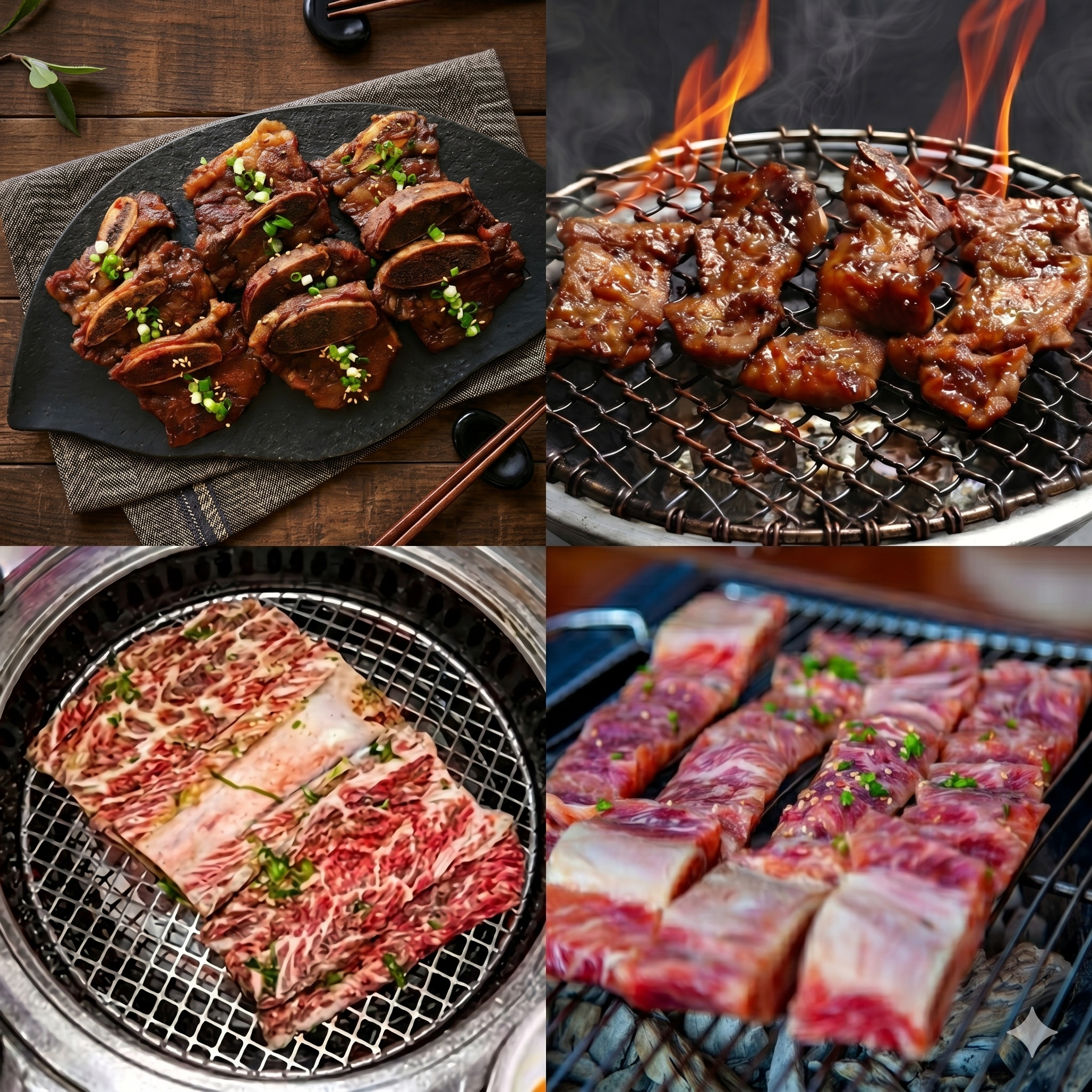 종류
정성
종류
정성
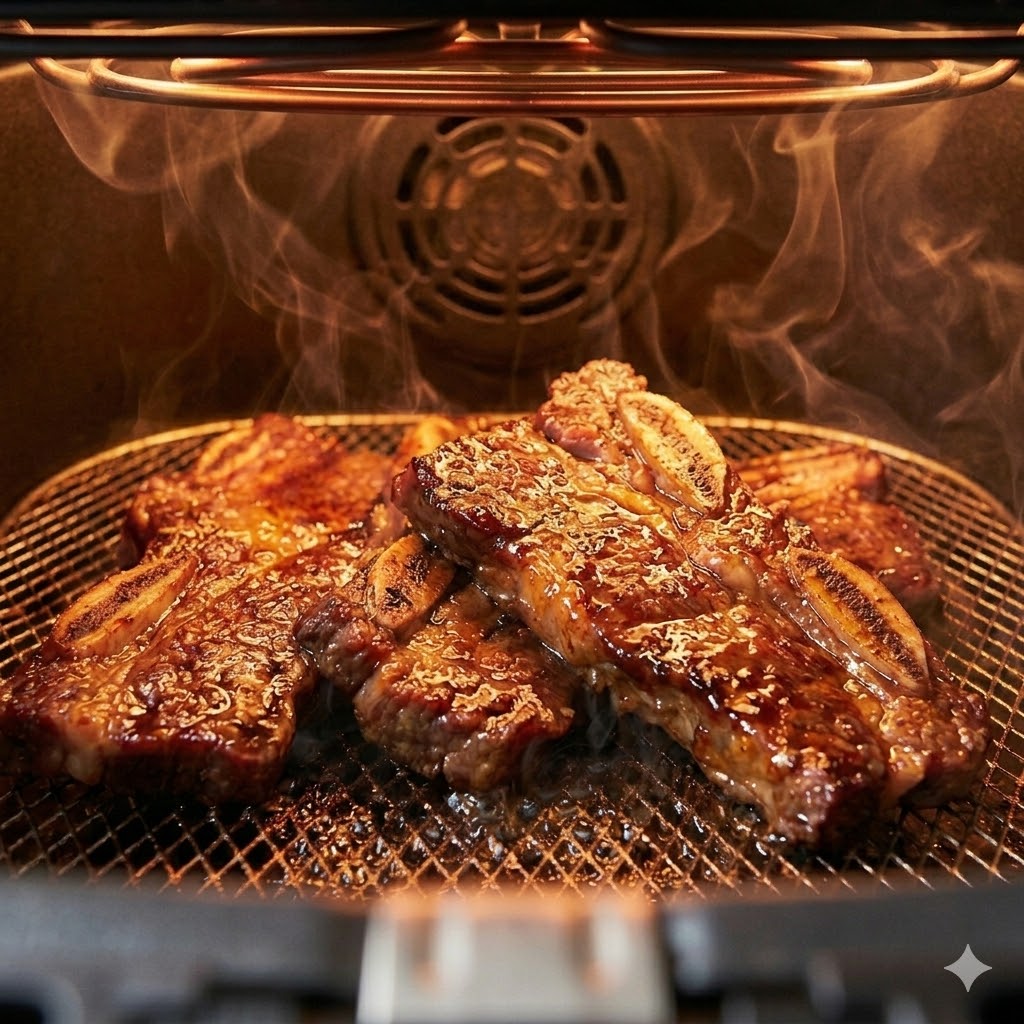 에어프라이어
왼쪽부터: 갈비 종류 · 갈비찜 재료 · 에어프라이어 LA갈비
갈비, 생각보다 종류가 많습니다
Galbi is not one dish — it's a category. Beef, pork, chicken. Grilled, braised, slow-cooked. Cut thick for Suwon-style wang-galbi, cut laterally for LA-style. The bone is the same. Everything after is a different decision.
갈비라고 다 같은 갈비가 아닙니다. 소갈비·돼지갈비·닭갈비, 구이·찜·탕. 자르는 방식만으로도 수원식·LA식으로 나뉩니다. 부위는 같고 그 다음부터 다른 음식입니다.
갈비구이
Galbi-gui · 불과 연기
Charcoal is the point. Gas grills work but they can't replicate the char, the smoke, the slight bitterness at the edges. Your clothes will smell — that's confirmation the heat was right. The texture: crisp outside, juicy and chewy inside. You work for each bite.
숯불이 핵심입니다. 가스불도 굽지만 숯불의 불 맛과 연기 향은 대체가 안 됩니다. 식당에서 나온 후 옷에 연기 냄새가 배는 건 잘 구워졌다는 증거입니다. 겉은 바삭, 속은 육즙 가득. 씹는 저항감이 있고 먹는 내내 손이 바쁩니다.
갈비찜
Galbi-jjim · 기다림과 정성
Not just soy sauce — jujubes, chestnuts, gingko nuts, carrots, potatoes go in. Serious households add ginseng. You soak the ribs, marinate overnight, then watch the pot for hours. The collagen breaks down. The meat yields at a touch. You can't fake this. The person eating knows immediately if someone spent the morning in the kitchen.
간장만이 아닙니다. 대추, 밤, 은행, 당근, 감자, 그리고 정성을 들이는 집에서는 인삼까지 들어갑니다. 핏물 빼고, 하룻밤 재우고, 몇 시간을 지켜봐야 합니다. 정성을 숨길 수가 없는 음식입니다. 먹는 사람이 첫 젓가락에 압니다.
씹는 질감이 완전히 다릅니다
Galbi-gui has resistance — you bite through it, juices release. Galbi-jjim barely needs teeth — touch it with chopsticks and meat slides off the bone. One is the experience of eating meat. The other is the experience of meat dissolving. Your mood decides.
갈비구이는 씹는 저항감이 있고 육즙이 입 안에서 터집니다. 갈비찜은 젓가락으로 살짝 건드리면 뼈에서 살이 분리됩니다. 하나는 고기를 씹는 경험, 하나는 고기가 녹는 경험입니다.
THE SUWON & LA CONNECTION
LA galbi wasn't invented in LA — Korean immigrants adapted a Jewish Flanken-cut in the 1970s and it was reverse-imported to Korea in the late 80s. Suwon's thick-cut wang-galbi came from Korea's largest cattle market in the 1940s. Two different cuts, two different continents, one bone.
LA갈비는 재미교포가 유대인의 횡절단 방식을 응용해 만들어 1980년대 말 한국에 역수입됐습니다. 수원 왕갈비는 1940년대 전국 3대 우시장에서 시작됐습니다. 같은 뼈, 다른 대륙, 다른 절단법.
📍 수원 — 갈비구이의 기준
우시장에서 태어난 왕갈비 · Born from Korea's largest cattle market
1940년대 수원은 전국 3대 우시장 중 하나였습니다. 소 거래가 활발한 영동시장 근처에 갈빗집이 생겼고, 원조집 화춘옥이 해장국에 넣어주던 갈비를 양념해 구워 팔기 시작하면서 입소문이 났습니다. '왕갈비'의 왕은 두께와 크기를 말합니다. 두꺼운 갈비에 깊이 칼집을 넣어 양념이 속까지 배도록 하는 수원 스타일은 지금도 갈비구이의 기준입니다.
In the 1940s, Suwon hosted one of Korea's three largest cattle markets. Butchers and restaurants followed. A place called Hwachunok started grilling marinated ribs that had been going into soup — thick-cut, deeply scored, charcoal-fired. That technique became the Suwon standard. The standard became the national reference.
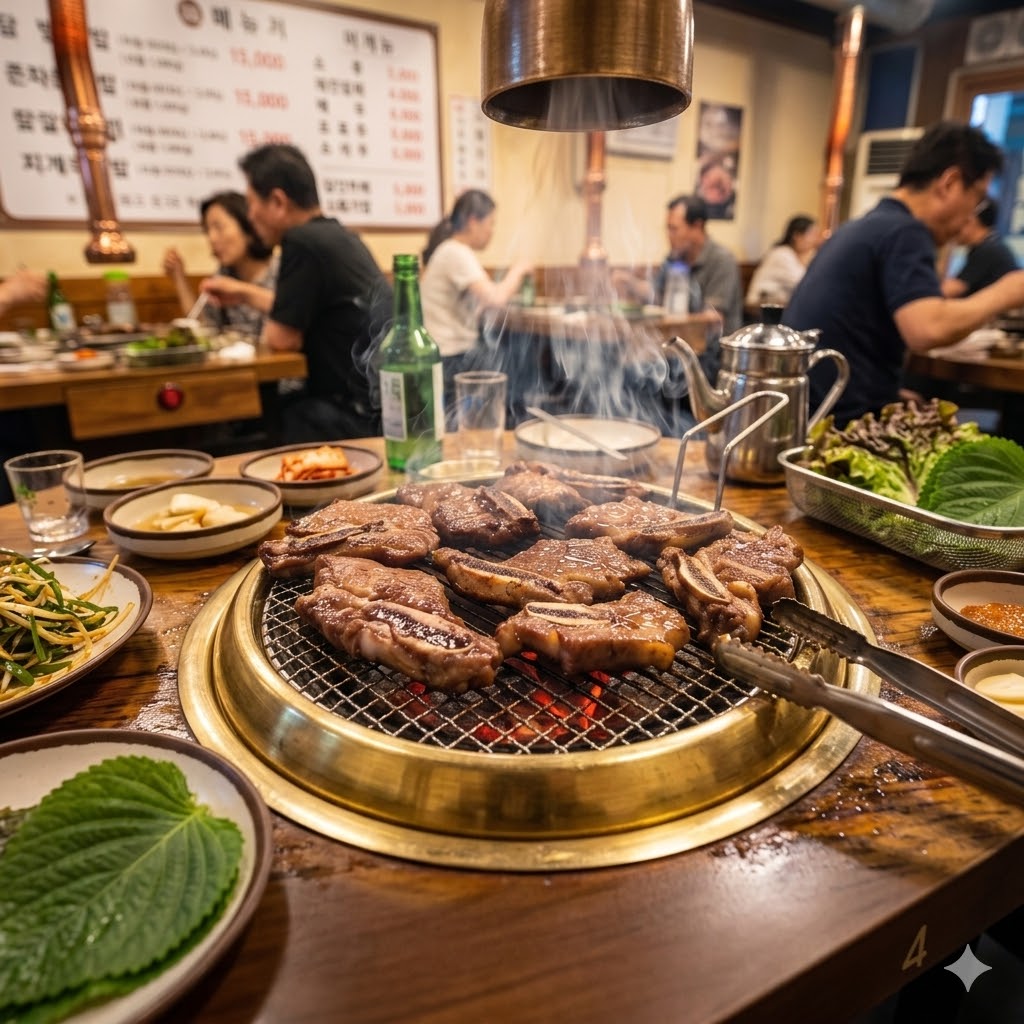
수원왕갈비터미널
Suwon Wang-Galbi Terminal · Paldal-gu, Suwon
수원 갈비 거리 대표 · 직화 숯불This is where Suwon-style galbi was standardized. The ribs are thick, heavily scored, and soaked in marinade overnight — then grilled tableside over direct charcoal heat. No shortcuts, no frills. You flip your own meat, eat at your own pace. If you're going to eat galbi in Korea, start here and calibrate everything else against it.
수원 갈비 거리의 터줏대감. 두꺼운 왕갈비에 칼집 깊숙이 넣고 양념 흠뻑. 직화 숯불에 구워 테이블에서 직접 뒤집어 먹는 수원 정통 방식. 갈비구이의 기준을 찾는다면 이곳에서 시작하세요.
📍 English menu available · ₩₩₩ · Open daily 11:00–22:00
📍 포천 이동면 — 군인이 만든 갈비
이쑤시개 갈비에서 전국구 명성으로 · From army mess to national fame
1960년대 포천 이동면에 주둔하던 군인들은 주머니 사정이 좋지 않았습니다. 식당들은 갈비 살을 이쑤시개에 꽂아 싸게 팔기 시작했습니다. 1970~80년대 등산객과 관광객이 몰리면서 전국구 명성을 얻었고, 지금은 이동면 장암리 일대에 갈비 식당이 줄지어 있습니다. 비결: 암소 한우, 화학조미료 없이 갖은 양념, 하룻밤 숙성, 참나무 숯불.
In the 1960s, soldiers stationed in Idong-myeon needed cheap food. Local restaurants skewered galbi scraps on toothpicks and sold them low. Hikers found it in the 70s and 80s on their way to the mountains, and word spread nationally. The recipe: female Hanwoo beef, no MSG, overnight marinade, oak charcoal. Still the same.
Widely regarded as the origin of Idong galbi. Female Hanwoo beef only — selected for tenderness, marinated overnight in a seasoning mix with no MSG, then grilled over oak charcoal. About 1.5 hours from Seoul by car, which honestly makes it a proper road trip. Drive up, eat well, drive back.
이동갈비의 원조로 꼽히는 집. 암소 한우를 선별하고 화학조미료 없이 갖은 양념만으로 하룻밤 재운 뒤 참나무 숯불에 구워냅니다. 이동갈비 특유의 방식을 가장 충실하게 지키는 곳. 서울에서 1시간 30분 — 드라이브 코스로도 손색없습니다.
📍 No English menu · ₩₩₩ · Lunch from 11:00 · Closed Mondays
📍 서울 — 구이 & 찜 모두
두 스타일 모두 서울에서 · Both versions, one city
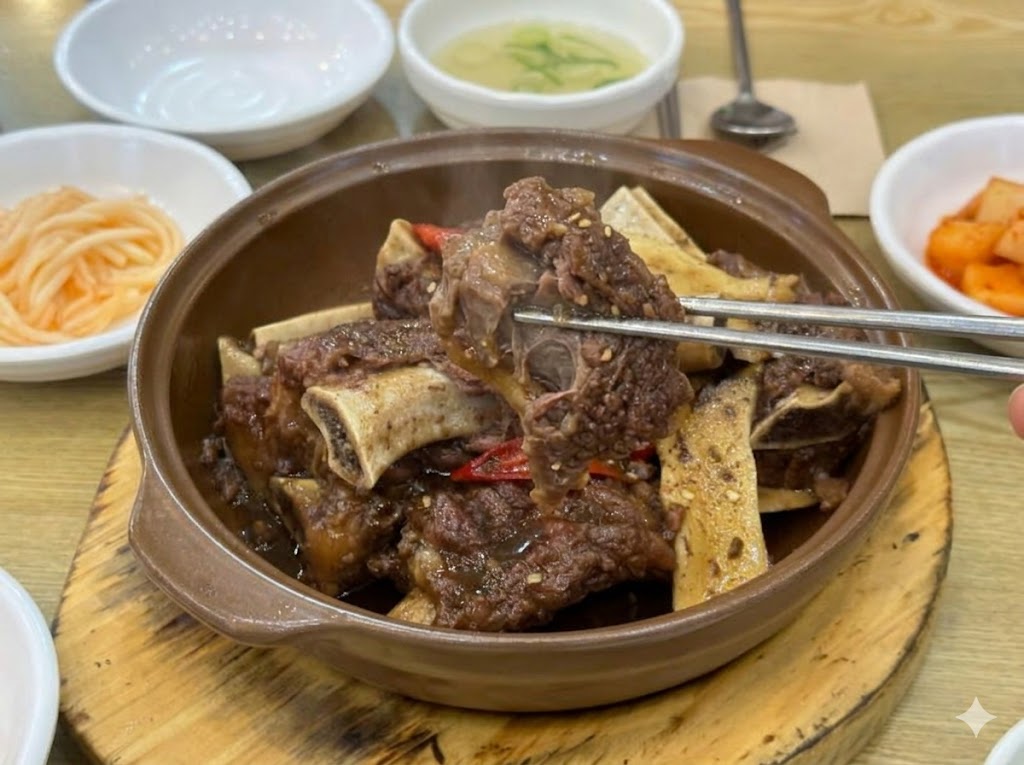
돌산등대집
Dolsan Deungdaejip · Seolleung, Gangnam
갓김치등갈비찜 · 한국 유일The only restaurant in Korea specializing in gat-kimchi spare rib stew — a combination that sounds odd until you taste it. The gat-kimchi (Yeosu-style mustard leaf kimchi) is fermented in-house using a grandmother's recipe from Jeolla province. Duroc spare ribs are braised with it in a cast iron pot for three hours. The result is tangy, deeply savory, and nothing like the galbi-jjim you've seen before. If this is your first time trying braised galbi, you're starting at the deep end — in the best possible way.
한국에서 유일한 갓김치등갈비찜 전문점. 여수 할머니 비법을 이어받아 직접 담근 갓김치와 듀록 등갈비를 가마솥에서 3시간 조림. 갈비찜의 고정관념을 깨는 곳. 찜 처음이라면 이 집 추천.
📍 English menu available · ₩₩₩ · 11:30–21:30 · Reservation recommended on weekends
Open since 1976, Cheonggiwatown brings Suwon-style wang-galbi to central Seoul. Thick-cut marinated beef ribs over direct charcoal — same method, similar quality, no hour-and-a-half drive. Staff are used to international guests, English communication is manageable, and the menu has photos. A reliable first stop for anyone landing in Seoul who wants to understand what the galbi fuss is about.
1976년부터. 수원식 왕갈비 스타일의 서울 대표 갈비집. 두꺼운 양념 갈비, 숯불 직화. 외국인도 많이 찾고 영어 응대 가능. 갈비구이를 서울에서 경험하고 싶다면 이곳.
📍 English-friendly · ₩₩₩ · Daily 11:30–22:00
Classic soy-braised beef short ribs — the style most Koreans grew up eating at Chuseok and Seollal. The marinade is sesame-oil based, which gives it a deeper, rounder umami than you'd expect. What sets this place apart is the final reduction: as the broth cooks down, the glaze concentrates around the meat in a way that most galbi-jjim misses. Seasonal holiday food, available any Tuesday in Gangnam.
간장 양념 소갈비찜의 정석. 참기름 마리네이드로 깊은 감칠맛. 육수가 졸아드는 마지막 단계가 이 집의 핵심. 명절 음식을 평일에 먹을 수 있는 곳.
📍 Korean menu only · ₩₩₩ · Lunch & dinner · Closed Sundays
Pronunciation Guide
"갈비" = Gal-bi · "갈비찜" = Gal-bi Jjim
Gal-bi: the G is soft, like "get" — not hard like "gold." Jjim rhymes with "gym" — it means braised or steamed. Put them together: Gal-bi Jjim. Koreans will know exactly which version you want.
이 시리즈의 다른 글