들기름 막국수
Perilla Oil Makguksu
올리브유보다 오래됐고 · 더 나은 것들 · Older Than Olive Oil. Better Than Most.
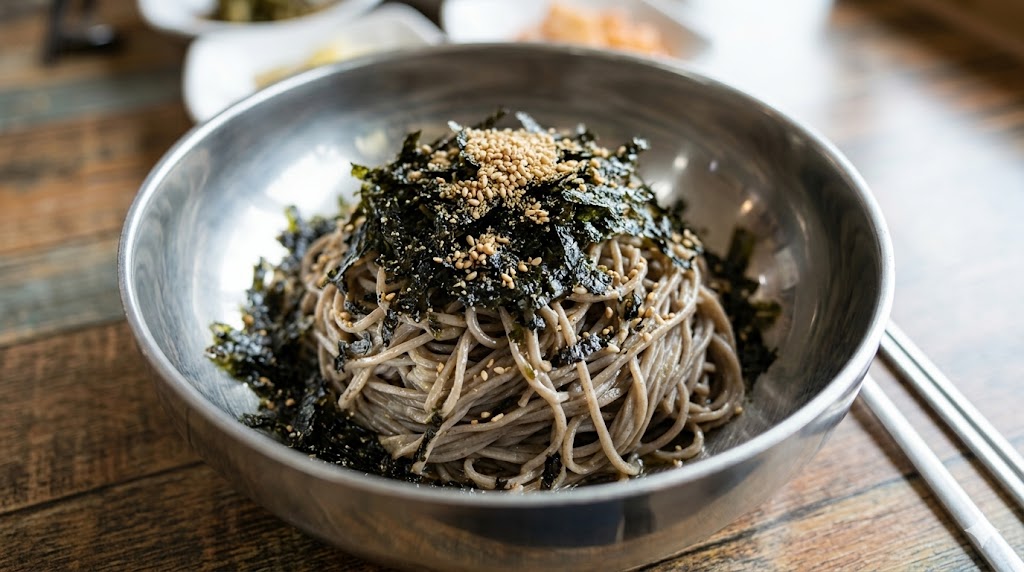
Photo: K-Food Stories · 들기름을 두른 메밀면 — 네 가지 재료의 정교한 균형
"While the world obsessed over olive oil, Korea had already been using something better for centuries." — Perilla Oil Makguksu.
올리브유가 지배하는 세상에서, 한국은 수백 년째 더 나은 걸 쓰고 있었습니다. — 들기름 막국수(Perilla Oil Makguksu) 이야기.
"While the world obsessed over olive oil, Korea had already been using something better for centuries." — Perilla Oil Makguksu.
올리브유가 지배하는 세상에서, 한국은 수백 년째 더 나은 걸 쓰고 있었습니다. — 들기름 막국수 이야기.
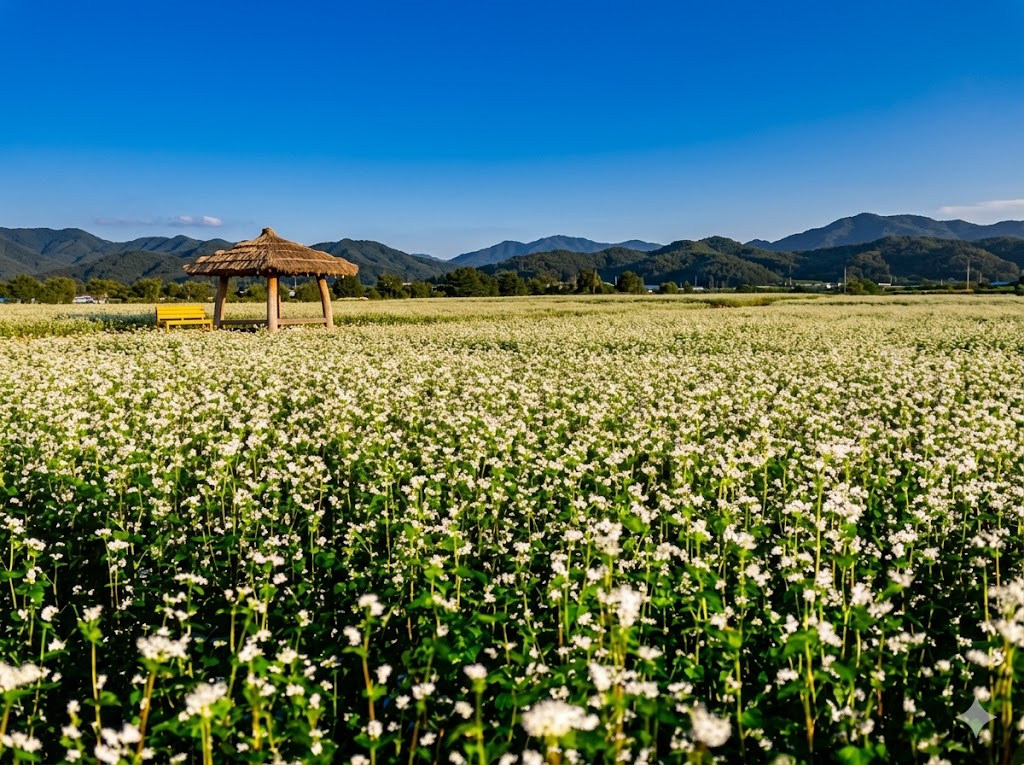
봉평 메밀밭 · Buckwheat fields of Bongpyeong, Gangwon-do
Ask someone to picture Korean noodles and you'll get one of two images: fiery red bibim with gochujang punch, or the clean cold broth of naengmyeon. Perilla oil makguksu looks like neither. A pale tangle of buckwheat noodles, slicked with something golden and faintly herbal. It arrives quietly. Then it makes you reconsider everything you thought you knew about Korean food.
Makguksu is from Gangwon-do — and more specifically, from Bongpyeong, the small village that Korean writer Yi Hyo-seok immortalized in his 1936 short story When Buckwheat Flowers Bloom. The famous opening image is fields of white buckwheat glowing under moonlight. The reason buckwheat grew there at all, though, wasn't poetry — it was geography. The mountains made rice cultivation nearly impossible, so buckwheat took over. The name makguksu literally means "rough noodles" — ground rough, pulled fast, eaten as-is. Perilla oil, soy sauce, sesame, dried seaweed. Four ingredients. No broth, no heat. The spicy bibim style that most foreigners associate with makguksu came later. This is the one that came first.
막국수 하면 대부분 두 가지를 떠올립니다. 빨갛고 매운 비빔 스타일, 아니면 차갑고 맑은 육수. 들기름 막국수는 그 어느 쪽도 아닙니다. 황금빛으로 윤기 나는 메밀면 한 그릇이 조용히 놓입니다. 그리고 한국 음식에 대한 모든 선입견을 조용히 반박합니다.
막국수의 고향은 강원도, 그중에서도 봉평입니다. 이효석의 단편소설 『메밀꽃 필 무렵』(1936)의 배경이 된 그 마을. 하얀 메밀꽃이 달빛에 반짝이는 장면으로 유명하지만, 그 땅이 메밀을 선택한 건 낭만이 아니라 현실이었습니다 — 산이 많아 벼농사가 불가능했으니까요. '막'국수라는 이름도 "막 갈아, 막 뽑아, 막 먹는" 소박함에서 왔습니다. 들기름, 국간장, 깨, 김가루 — 재료 네 가지가 전부인 이 방식이 지금 우리가 '들기름 막국수'라고 부르는 원형입니다. 비빔 스타일이 유행하기 훨씬 전부터 있었던, 사실 더 오래된 버전.
Ask someone to picture Korean noodles and you'll get one of two images: fiery red bibim with gochujang punch, or the clean cold broth of naengmyeon. Perilla oil makguksu looks like neither. A pale tangle of buckwheat noodles, slicked with something golden and faintly herbal. It arrives quietly. Then it makes you reconsider everything.
Makguksu is from Gangwon-do — more specifically, from Bongpyeong, the village Yi Hyo-seok immortalized in his 1936 short story When Buckwheat Flowers Bloom. The buckwheat grew there not for poetry, but because the mountains made rice farming impossible. The name makguksu means "rough noodles" — ground rough, pulled fast, eaten as-is. Perilla oil, soy sauce, sesame, dried seaweed. Four ingredients. The spicy bibim style came later. This is the original.
막국수 하면 대부분 빨갛고 매운 비빔 스타일이나 차가운 육수를 떠올립니다. 들기름 막국수는 그 어느 쪽도 아닙니다.
막국수의 고향은 강원도 봉평. 이효석의 『메밀꽃 필 무렵』(1936) 배경이 된 그 마을입니다. 산이 많아 벼농사가 불가능했던 땅에서 메밀이 자랐고, 들기름·간장·깨·김가루 네 가지로 먹는 이 방식이 원형입니다. 비빔 스타일보다 훨씬 먼저였습니다.
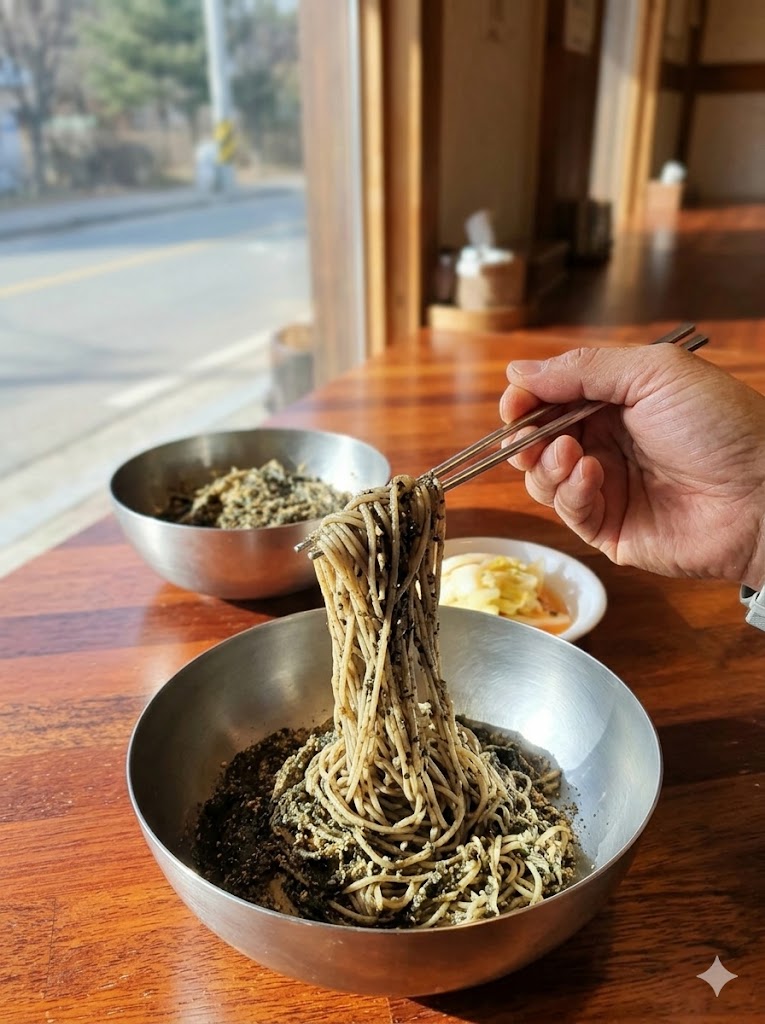
"The quiet counter-argument to everything K-Food is supposed to be."
In a moment when "K-Spicy" has become shorthand for an entire cuisine, perilla oil makguksu has quietly become the counter-argument. It's the dish Korean food lovers point to when they want to say: we have a different register. Something restrained. Something precise. The old-school makguksu joints — some pulling noodles the same way for fifty years — still run lunchtime queues on weekdays. This was never a trend. It didn't need to be.
지금 한국 미식가들 사이에서 들기름 막국수는 조용한 반란입니다. 자극 없이, 화려한 고명 없이, 이 정도로 완성도 있는 한 그릇이 가능하다는 사실. "K-푸드는 다 맵고 강렬하다"는 편견을 가장 조용하게, 가장 완벽하게 반박하는 음식. 수십 년째 같은 방식으로 면을 뽑는 전문점들이 여전히 평일 낮에 줄을 세우는 이유가 여기에 있습니다.
In a moment when "K-Spicy" has become shorthand for an entire cuisine, perilla oil makguksu has quietly become the counter-argument. Something restrained. Something precise. The old-school makguksu joints still run lunchtime queues on weekdays. This was never a trend. It didn't need to be.
지금 한국 미식가들 사이에서 들기름 막국수는 조용한 반란입니다. 자극 없이도 이 정도로 완성도 있는 한 그릇이 가능하다는 사실. "K-푸드는 다 맵고 강렬하다"는 편견을 가장 조용하게, 가장 완벽하게 반박하는 음식.
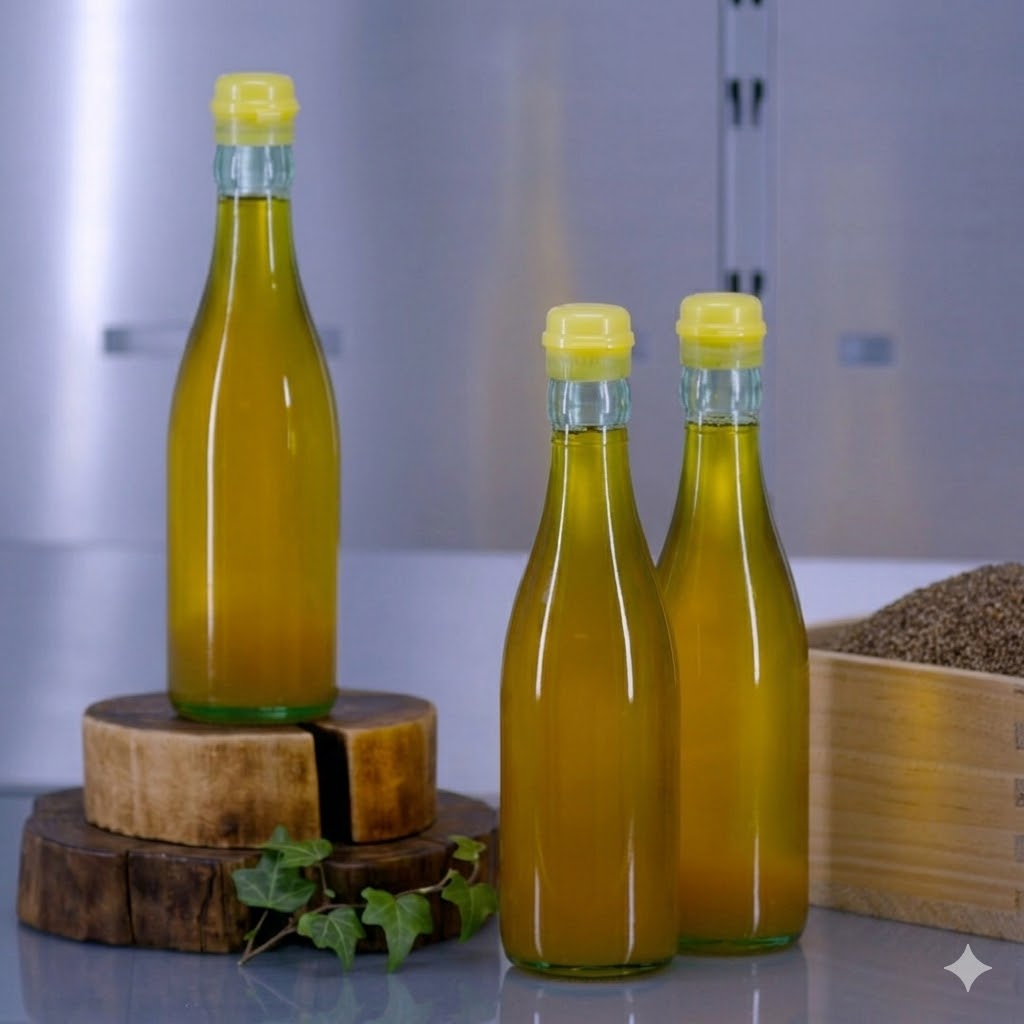 들기름
들기름
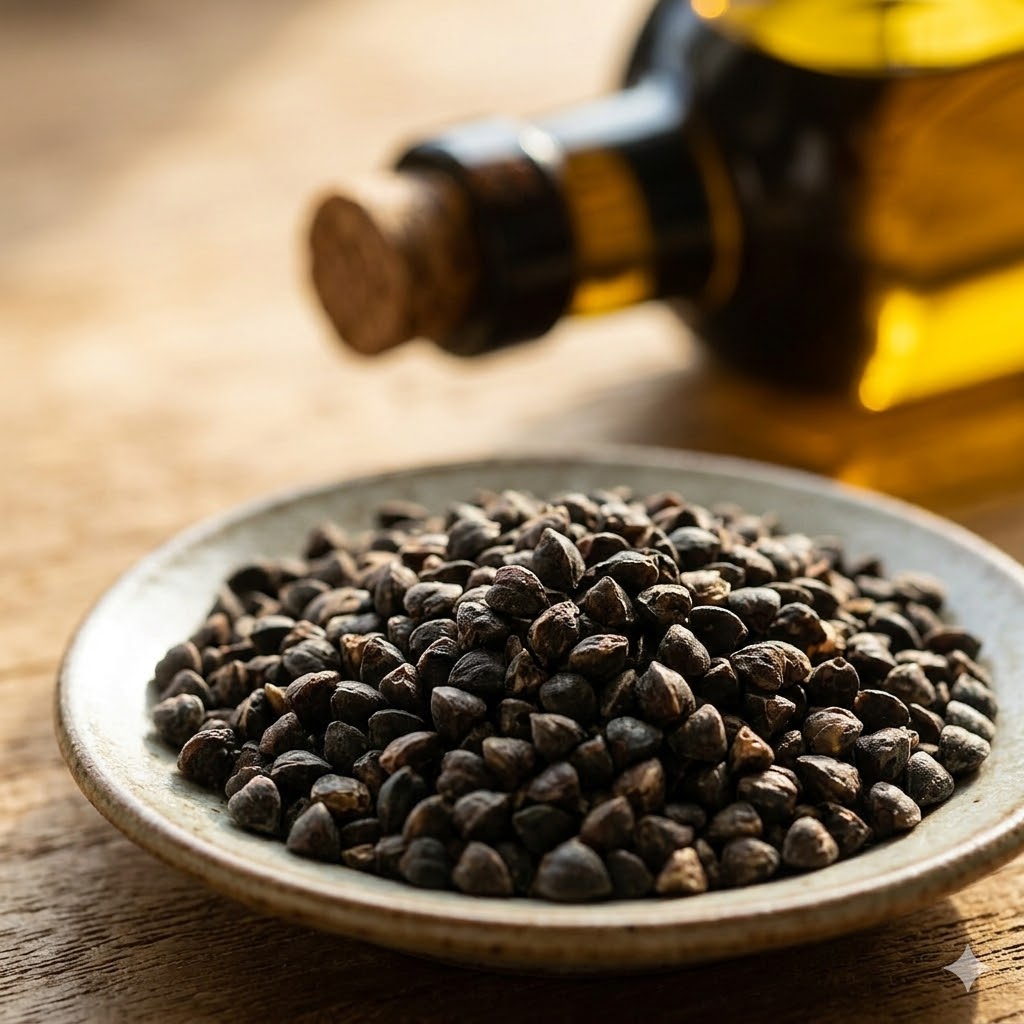 메밀
메밀
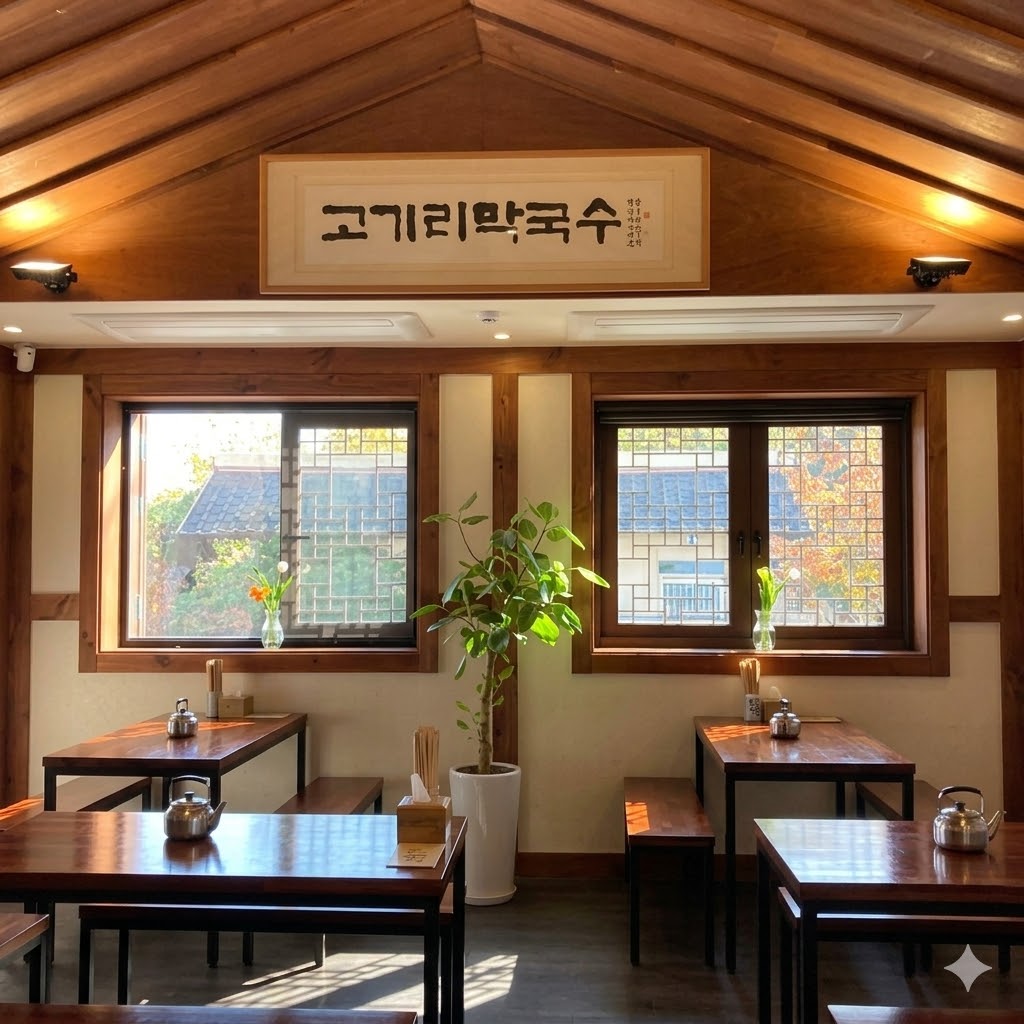 성지순례
성지순례
왼쪽부터: 들기름 · 메밀 원물 · 막국수 성지
That's Not Sesame Oil
Perilla oil and sesame oil are not the same thing. They look alike, smell vaguely similar, but perilla oil carries up to 60 times more omega-3 fatty acids than olive oil. The Western food world is only beginning to notice — Koreans have known for centuries.
들기름(들깨 기름)과 참기름(참깨 기름)은 다릅니다. 비슷하게 생겼지만, 들기름의 오메가-3 지방산 함량은 올리브유보다 최대 60배 높습니다. 서구에서 '한국의 올리브유'라는 별명이 붙기 시작한 이유입니다.
The Buckwheat Advantage
Buckwheat is not wheat. Botanically closer to quinoa and amaranth — no gluten, low glycemic index, rich in lysine, an essential amino acid wheat lacks. The Western wellness world has been chasing buckwheat for years. In Bongpyeong, they just call it noodles.
메밀은 밀이 아닙니다. 식물 분류상 퀴노아와 같은 계열. 글루텐 없고, GI 지수 낮고, 밀에 부족한 필수 아미노산 라이신도 풍부합니다. 서구 건강식품 시장이 몇 년째 쫓고 있는 재료인데, 봉평에선 그냥 면이었습니다.
Not Your Average Noodle
Buckwheat noodles don't behave like wheat noodles. No gluten means low elasticity — the moment they're pulled, the clock starts. The texture is cool and slightly crumbly with an earthy, nutty finish. They don't absorb sauce like pasta does; they sit on top of the oil, coated. That's why the ratio matters so much.
메밀면은 일반 밀면과 완전히 다르게 움직입니다. 글루텐이 없어 점성이 낮고, 뽑는 순간부터 시간이 시작됩니다. 탱탱함 대신 서늘하고 끊어지는 듯한 식감, 뒤에 남는 구수하고 흙내음 같은 향. 밀면처럼 소스를 흡수하지 않고 기름 위에 얹혀 있습니다. 그래서 비율이 전부입니다.
The Gangwon Pilgrimage
People in Seoul drive two hours to Sokcho or Chuncheon just for makguksu and turn around and drive back. The buckwheat grown in Gangwon soil, milled and pulled the same day — the texture is different. Once you've had that version, it resets your baseline.
서울 사람들이 주말에 2시간 운전해서 속초·춘천까지 막국수 먹으러 갑니다. 이게 실제 상황입니다. 강원도 땅에서 자란 메밀로 당일 뽑은 면의 텍스처는 다릅니다. 한 번 경험하면 기준이 리셋됩니다.
| 재료 Ingredient | 대체재 / 구매처 Substitute / Where to Find |
|---|---|
| 메밀면 200g | Buckwheat soba noodles — Korean/Japanese grocery, Amazon |
| 들기름 3~4 tbsp | Perilla seed oil — NOT sesame oil · Korean grocery (H-Mart, online) |
| 국간장 2 tbsp | Korean soup soy sauce · 일반 간장 + 소금 약간으로 대체 가능 |
| 김가루 2 tbsp | Dried seaweed flakes · Crumbled roasted nori works too |
| 통깨 1 tbsp | Toasted sesame seeds |
| 오이 ⅓개 (채) 선택 | Julienned cucumber — optional but recommended |
| 달걀 반숙 1개 선택 | Soft-boiled egg — optional |
-
1
Boil buckwheat noodles in plenty of water for 3–4 minutes. Rinse thoroughly under cold running water until fully cooled. Shake off excess water well — this matters more than it sounds.
메밀면을 끓는 물에 3~4분 삶는다. 찬물에 충분히 헹궈 완전히 식힌다. 물기를 충분히 털어낸다 — 이게 생각보다 중요합니다.
-
2
In a mixing bowl, add the soy sauce first, then slowly pour in the perilla oil while stirring to combine.
볼에 국간장을 먼저 넣고, 들기름을 천천히 부으며 잘 섞는다.
-
3
Add the noodles and toss gently until every strand is coated — not saturated, just coated.
면을 넣고 소스가 고르게 배도록 손으로 가볍게 버무린다. 흡수가 아니라 코팅이 목표입니다.
-
4
Transfer to a bowl. Finish generously with seaweed flakes, then sprinkle sesame seeds. Add julienned cucumber and a soft-boiled egg to complete.
그릇에 담고 김가루를 올린 뒤, 깨가루를 듬뿍 뿌린다. 오이와 달걀 반숙으로 마무리.
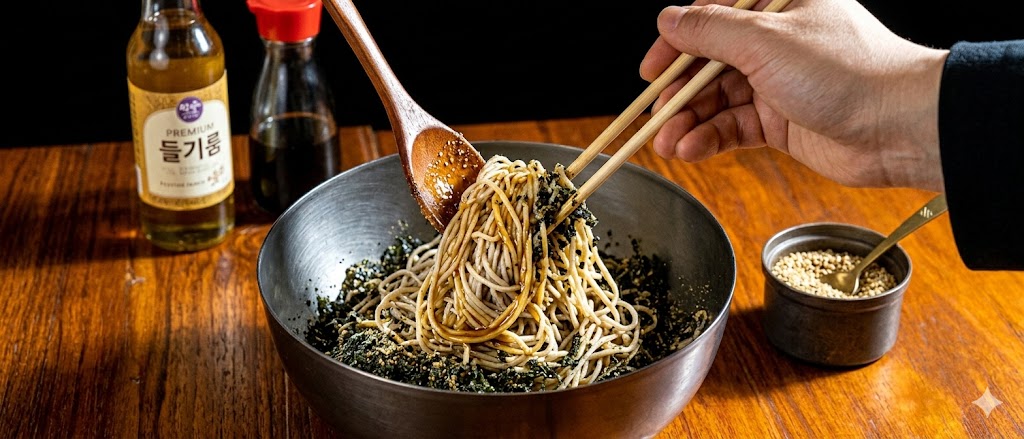
들기름 + 간장 소스로 코팅하듯 버무리는 것이 포인트 · Toss to coat, not to soak
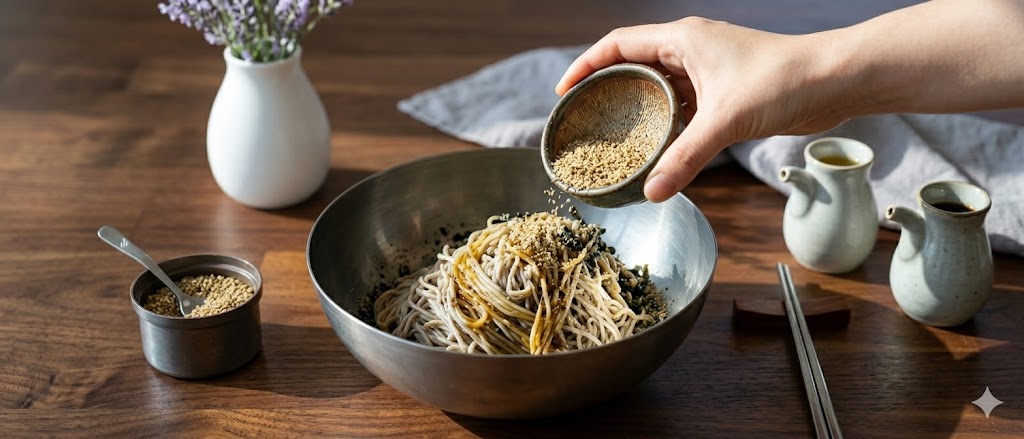
깨가루를 아낌없이 · Don't hold back on the sesame
💡 이것만 알면 됩니다 · The One Rule
Never heat the perilla oil. Add it raw, at room temperature, at the very end. Heat destroys the delicate herbal aroma that makes perilla oil what it is. That fragrance — somewhere between grass and nuts — is the whole point.
들기름은 절대 가열하지 않는다. 마지막에, 상온 그대로 넣어야 들기름 특유의 풀향과 고소함이 살아납니다. 그 향이 이 음식의 전부입니다.
고기리막국수
Gogiri Makguksu · Yongin, Gyeonggi-do
수요미식회 · 2시간 웨이팅하루에도 여러 차례 메밀을 직접 빻아 즉석에서 면을 뽑는 100% 순메밀 전문점. 수요미식회가 소개하면서 '2시간 웨이팅'이 전설이 된 곳. 들기름막국수 기준 9,000원. 화요일 휴무.
100% pure buckwheat noodles — ground and pulled in-house multiple times a day. After its Wednesday Food Talk TV appearance, the two-hour wait queue became the stuff of legend. The perilla oil version is 9,000 won. Closed Tuesdays. Worth the drive from Seoul.
MZ 사이에서 SNS 검증 완료 · 외국인도 키오스크 없이 주문 가능
국산 들깨 착즙 들기름 + 감태 조합. 막국수 입문 맛집으로 MZ에게 가장 검색되는 곳. 들기름막국수 12,000원대. 주말 웨이팅 있음.
Cold-pressed domestic perilla oil paired with sea mustard. The go-to for first-timers and the most Instagrammed makguksu spot in Seoul. Around 12,000 won. Weekend queues expected.
100% 메밀 순면, 영어 메뉴 있음. 트러플막국수 변형으로 SNS 버즈. 외국인 동행 시 접근성 최고.
100% buckwheat noodles with English menus — the most foreign-friendly option in Seoul. Their truffle makguksu variation has its own fan base. Multiple locations, easy to find.
고향막국수
Gohyang Makguksu · Bongpyeong-myeon, Pyeongchang
강원도 5대 막국수 · 현지인 맛집강원도 5대 막국수로 꼽히는 봉평 본토 맛집. 100% 순메밀면에 메밀싹과 갓김치를 올린 정통 스타일. 이효석문학관·봉평장터와 같은 동선. 이 한 그릇을 위해 봉평까지 오는 것이 과하지 않다고, 현지인들은 말합니다.
One of the top five makguksu spots in Gangwon-do, according to the people who live there. Pure buckwheat noodles topped with buckwheat sprouts and mustard kimchi — the traditional Bongpyeong way. On the same route as the Yi Hyo-seok Literary Museum and Bongpyeong Market. The locals say the drive is not too much.
메밀꽃 피는 9~10월 방문 추천 · Best visited during buckwheat bloom season (Sept–Oct)
발음 가이드 · Pronunciation Guide
"들기름 막국수" = Deul-gi-reum Mak-guk-su
들 (Deul) — rhymes with "pull"
기름 (gi-reum) — sounds like "gear-um"
막국수 (Mak-guk-su) — mak rhymes with "rock"
이 시리즈 · This Series