๊น€์น˜ / Kimchi โ€” K-Food Stories
๊น€์น˜
Kimchi
Original  ยท  v1  ยท  ํ•œ์˜ ๋ณ‘๊ธฐ
Kimchi ยท ๊น€์น˜ Fermented 200+ Varieties K-Food Stories
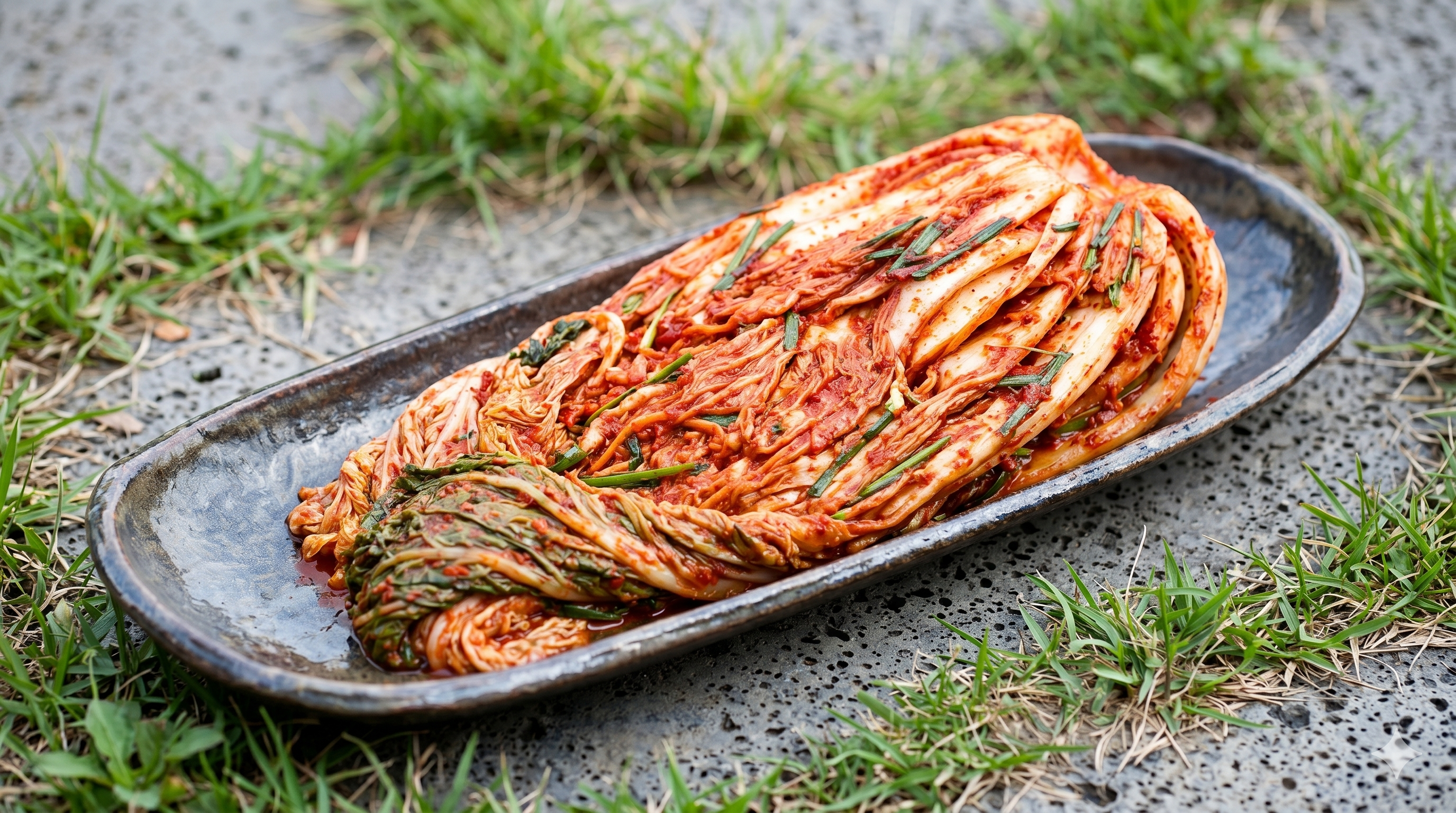
๋ฐฐ์ถ”๊น€์น˜ ํด๋กœ์ฆˆ์—… โ€” Fresh baechu-kimchi close-up on stone plate

๋ฐฐ์ถ”๊น€์น˜ ยท Baechu-kimchi โ€” the one you already know. One of 200+.
"Not all kimchi will destroy your taste buds. And the red part? That's actually a recent development."
๋นจ๊ฐ›๋‹ค๊ณ  ๋‹ค ๋งค์šด ๊ฑด ์•„๋‹™๋‹ˆ๋‹ค. ๊ทธ๋ฆฌ๊ณ  ์‚ฌ์‹ค, ์ฒ˜์Œ๋ถ€ํ„ฐ ๋นจ๊ฐ›์ง€๋„ ์•Š์•˜์Šต๋‹ˆ๋‹ค. โ€” ๊น€์น˜(Kimchi) ์ด์•ผ๊ธฐ์ž…๋‹ˆ๋‹ค.
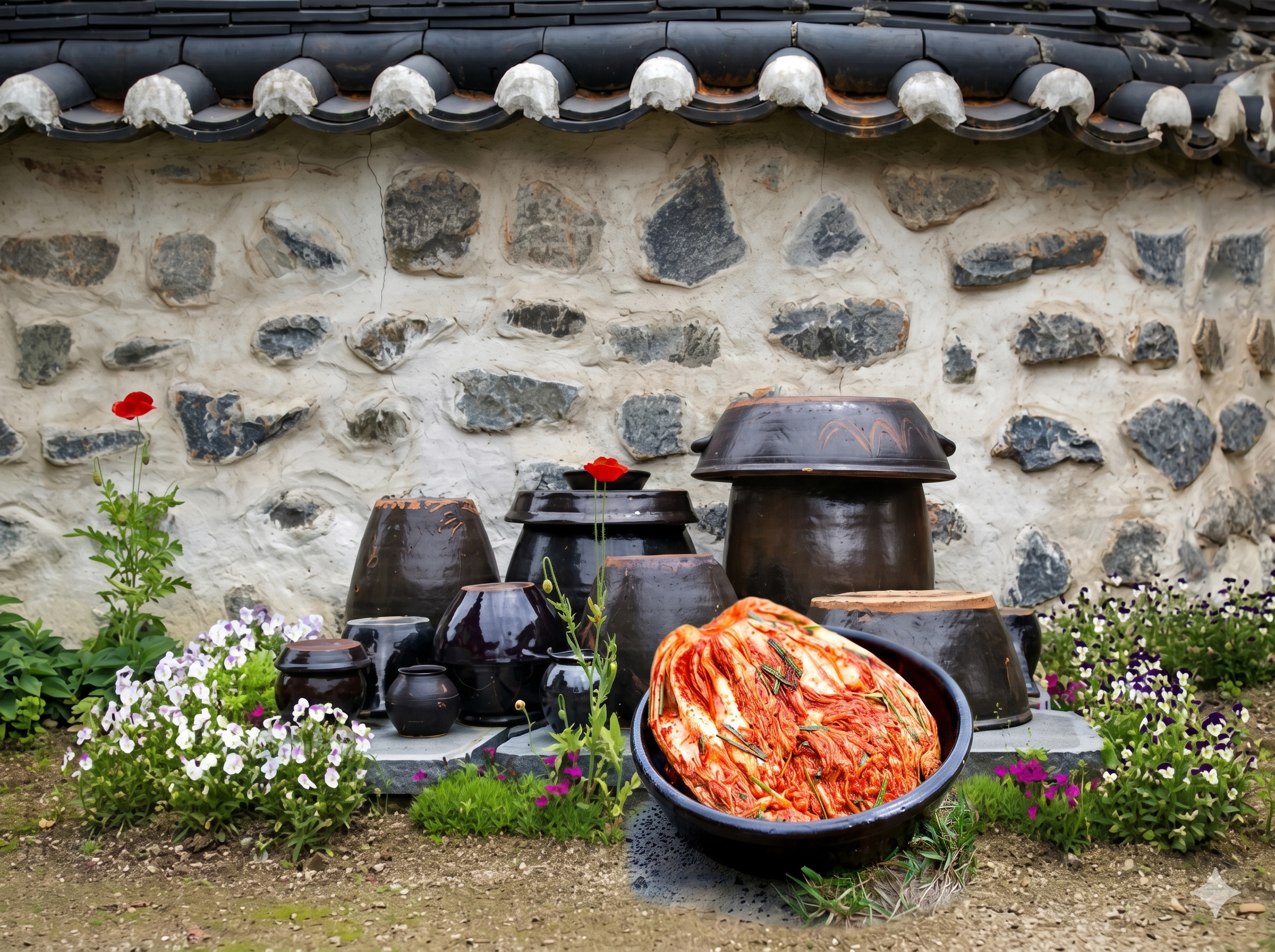
์ „ํ†ต ์žฅ๋…๋Œ€์™€ ํ•ญ์•„๋ฆฌ โ€” Traditional Korean jangdokdae earthenware jars
Before the Red ยท ๋นจ๊ฐ„์ƒ‰ ์ด์ „
"For two thousand years, these jars held white kimchi. Salt, garlic, ginger โ€” no heat, no red. The chili pepper arrived only 400 years ago."
ํ•œ๊ตญ์–ด

๋Œ€๋ถ€๋ถ„์˜ ์™ธ๊ตญ์ธ์€ ๊น€์น˜๋ฅผ ๋”ฑ ํ•˜๋‚˜์˜ ์ด๋ฏธ์ง€๋กœ ๊ธฐ์–ตํ•ฉ๋‹ˆ๋‹ค. ๋นจ๊ฐ›๊ณ , ๋งต๊ณ , ๋ƒ„์ƒˆ ๊ฐ•ํ•œ ๊ทธ๊ฒƒ. ๊ทธ ์ธ์ƒ ๋•Œ๋ฌธ์— ํ•œ๊ตญ ์‹๋‹น์—์„œ ๋ฐ˜์ฐฌ ๊ทธ๋ฆ‡์„ ์Šฌ์ฉ ํ”ผํ•˜๊ฒŒ ๋˜๋Š” ๊ฒƒ. ์ถฉ๋ถ„ํžˆ ์ดํ•ดํ•ฉ๋‹ˆ๋‹ค. ํ•˜์ง€๋งŒ ๊ทธ๊ฑด ๊น€์น˜ 200๊ฐ€์ง€ ์ค‘ ๋‹จ ํ•˜๋‚˜์˜ ํ‘œ์ •์ผ ๋ฟ์ž…๋‹ˆ๋‹ค.

๋†€๋ผ์šด ์‚ฌ์‹ค ํ•˜๋‚˜: ๊ณ ์ถ”๊ฐ€ ํ•œ๊ตญ์— ๋“ค์–ด์˜จ ๊ฑด ๋ถˆ๊ณผ 400๋…„ ์ „์ž…๋‹ˆ๋‹ค. ์ž„์ง„์™œ๋ž€ ๋ฌด๋ ต, ํฌ๋ฅดํˆฌ๊ฐˆ ์ƒ์ธ์ด ์ผ๋ณธ์—, ์ผ๋ณธ์ด ์กฐ์„ ์— ์ „ํ•œ ๊ฒƒ์ด ์‹œ์ž‘์ด์—ˆ์Šต๋‹ˆ๋‹ค. ๊ทธ ์ „ ์ˆ˜์ฒœ ๋…„ ๋™์•ˆ ๊น€์น˜๋Š” ํ•˜์–€์ƒ‰์ด์—ˆ์Šต๋‹ˆ๋‹ค. ์†Œ๊ธˆ๊ณผ ๋งˆ๋Š˜, ์ƒ๊ฐ•์œผ๋กœ ์ ˆ์ธ ๋‹ด๋ฐฑํ•œ ์ฑ„์†Œ. ์šฐ๋ฆฌ๊ฐ€ ์•„๋Š” '๋นจ๊ฐ„ ๊น€์น˜'๋Š”, ์—ญ์‚ฌ ์† ์‹ ์ฐธ์ž…๋‹ˆ๋‹ค.

์ง€๊ธˆ ํ•œ๊ตญ์ธ์˜ ๋ƒ‰์žฅ๊ณ ๋ฅผ ์—ด๋ฉด, ๊น€์น˜๋Š” ์–ธ์ œ๋‚˜ ๊ฑฐ๊ธฐ ์žˆ์Šต๋‹ˆ๋‹ค. ์—ฌ๋ฆ„์—” ์•„์‚ญํ•œ ์˜ค์ด์†Œ๋ฐ•์ด, ๊ฒจ์šธ์—” ์‹œ์›ํ•œ ๋™์น˜๋ฏธ, 1๋…„ ๋‚ด๋‚ด ๊นŠ๊ฒŒ ์ˆ™์„ฑ๋œ ๋ฐฐ์ถ”๊น€์น˜. ํ•œ๊ตญ์ธ์—๊ฒŒ ๊น€์น˜๋Š” ๋ฐ˜์ฐฌ์ด ์•„๋‹™๋‹ˆ๋‹ค. ๊ณต๊ธฐ ๊ฐ™์€ ์กด์žฌ์ž…๋‹ˆ๋‹ค.

๊ทธ ๊ณต๊ธฐ ๊ฐ™์€ ์กด์žฌ๋ฅผ ์œ„ํ•ด ํ•œ๊ตญ์—” ์ „์šฉ ๋ƒ‰์žฅ๊ณ ๊ฐ€ ๋”ฐ๋กœ ์žˆ์Šต๋‹ˆ๋‹ค. ๊น€์น˜๋ƒ‰์žฅ๊ณ  โ€” ์ผ๋ฐ˜ ๋ƒ‰์žฅ๊ณ ์™€ ๋ณ„๋„๋กœ, ์˜ค์ง ๊น€์น˜๋งŒ์„ ์œ„ํ•œ ๊ฐ€์ „์ œํ’ˆ. ์‹ ํ˜ผ ์‚ด๋ฆผ ํ•„์ˆ˜ํ’ˆ 1์œ„๋ฅผ ์ˆ˜์‹ญ ๋…„์งธ ๋†“์น˜์ง€ ์•Š๋Š” ๊ทธ๊ฒƒ. 2013๋…„์—” ๋Šฆ๊ฐ€์„ ์˜จ ๊ฐ€์กฑ์ด ๋ชจ์—ฌ ์ˆ˜๋ฐฑ ํฌ๊ธฐ์˜ ๊น€์น˜๋ฅผ ํ•จ๊ป˜ ๋‹ด๊ทธ๋Š” '๊น€์žฅ๋ฌธํ™”'๊ฐ€ ์œ ๋„ค์Šค์ฝ” ์ธ๋ฅ˜๋ฌดํ˜•๋ฌธํ™”์œ ์‚ฐ์œผ๋กœ ๋“ฑ์žฌ๋์Šต๋‹ˆ๋‹ค. ๋‹จ์ˆœํ•œ ๋ ˆ์‹œํ”ผ๊ฐ€ ์•„๋‹ˆ๋ผ ๋‚˜๋ˆ”๊ณผ ์œ ๋Œ€์˜ ์˜์‹์œผ๋กœ์„œ. ๊ทธ๋ฆฌ๊ณ  ์ง€๊ธˆ, ์„ธ๊ณ„๋Š” ์ด์ œ์•ผ ๊น€์น˜๋ฅผ ์•Œ์•„๋ณด๊ธฐ ์‹œ์ž‘ํ–ˆ์Šต๋‹ˆ๋‹ค. ๋ฐœํšจ์‹ํ’ˆ ๋ถ, ํ”„๋กœ๋ฐ”์ด์˜คํ‹ฑ ์—ดํ’, K-์ปฌ์ฒ˜์˜ ๋ฌผ๊ฒฐ์„ ํƒ€๊ณ  โ€” ํ•œ๊ตญ์ธ์ด ์ˆ˜์ฒœ ๋…„์งธ ๋‹น์—ฐํ•˜๊ฒŒ ๋จน์–ด์˜จ ๊ฒƒ์ด, ๊ฐ‘์ž๊ธฐ ์ง€๊ตฌ ๋ฐ˜๋Œ€ํŽธ์—์„œ '์Šˆํผํ‘ธ๋“œ'๊ฐ€ ๋์Šต๋‹ˆ๋‹ค.

English

Most people outside Korea picture kimchi as one thing: red, spicy, aggressively pungent. The kind of side dish that gets quietly slid to the edge of the table. Fair enough. But that's just one face of over 200 different kimchi varieties.

Here's the twist: chili peppers only arrived in Korea about 400 years ago โ€” brought by Portuguese traders to Japan, then passed on to Joseon Korea around the time of the Imjin War. For the two thousand years before that, kimchi was white. Fermented vegetables with salt, garlic, and ginger. No heat, no red. The fiery version is the newcomer.

Open any Korean refrigerator today and you'll find kimchi. Cucumber kimchi in summer, icy water kimchi in winter, and the deep, slow-fermented cabbage kind always in the back. For Koreans, kimchi isn't a side dish. It's the baseline. Without it, a meal is just food.

And because that baseline is non-negotiable, Korean households own a second refrigerator โ€” one that exists solely for kimchi. The kimchi fridge is a cultural artifact: it maintains precise temperature and humidity by season, it's a standard wedding gift, and it has outsold every other kitchen appliance in Korea for decades. In 2013, UNESCO added kimjang โ€” the late-autumn ritual of making hundreds of heads of kimchi together as a family โ€” to its Intangible Cultural Heritage list. Not as a food. As an act of community. Then K-culture went global, the fermentation food boom hit, and the world suddenly discovered what Koreans had been quietly eating for three thousand years. The West called it a superfood. Koreans just called it Tuesday.
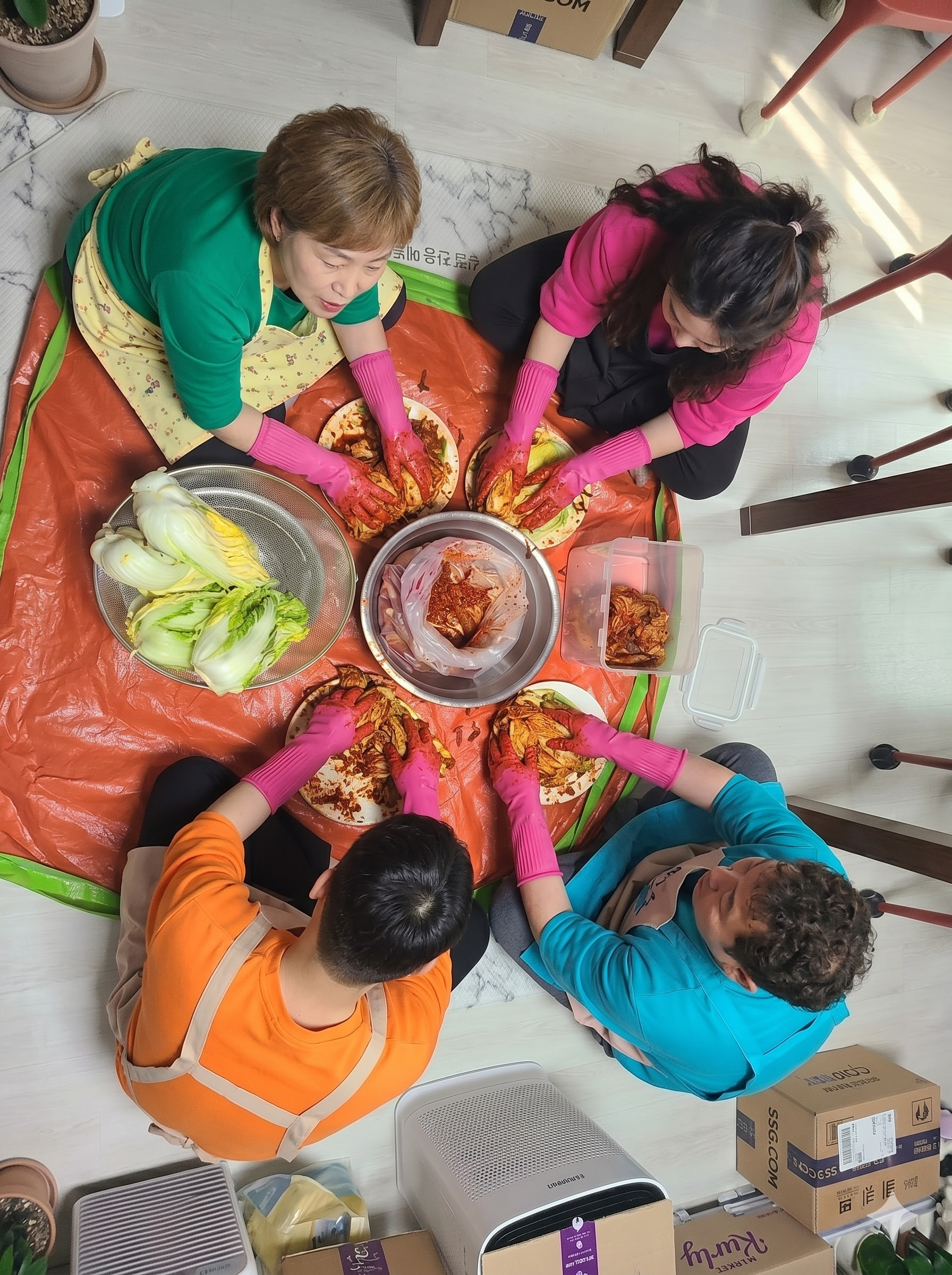
Kimjang ยท ๊น€์žฅ๋ฌธํ™” ยท UNESCO 2013
"Every late autumn, families gather to make hundreds of heads of kimchi at once. It's less of a recipe. It's a ritual."
๋งค๋…„ ๋Šฆ๊ฐ€์„, ์˜จ ๊ฐ€์กฑ์ด ๋ชจ์—ฌ ์ˆ˜๋ฐฑ ํฌ๊ธฐ์˜ ๊น€์น˜๋ฅผ ๋‹ด๊ธ‰๋‹ˆ๋‹ค. ๋ ˆ์‹œํ”ผ๊ฐ€ ์•„๋‹™๋‹ˆ๋‹ค. ์˜์‹์ž…๋‹ˆ๋‹ค.
๊น€์žฅ ์žฅ๋ฉด, ๊ฐ€์กฑ์ด ๋‘˜๋Ÿฌ์•‰์•„ โ€” Kimjang scene, family making kimchi together overhead view
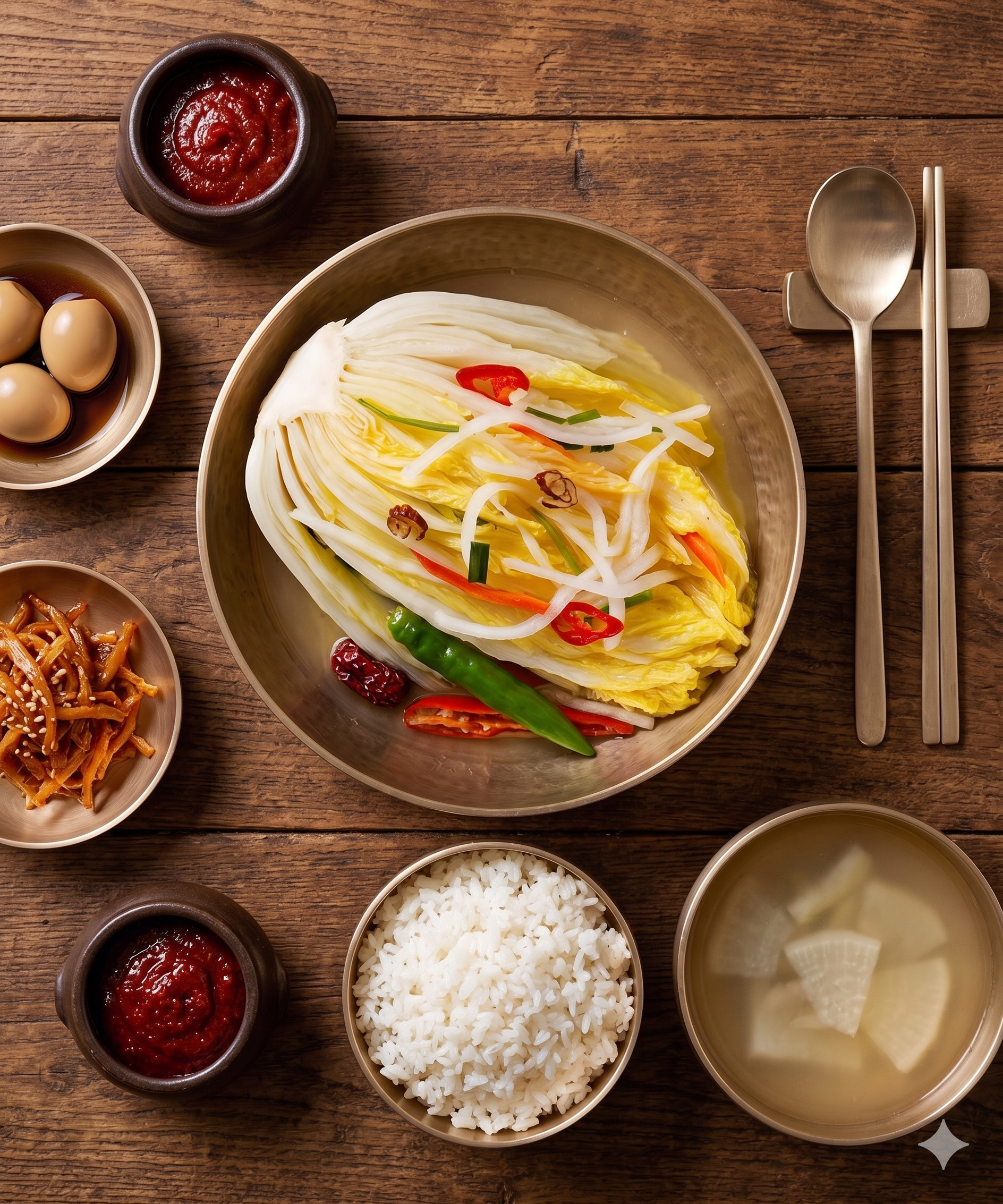
๋ฐฑ๊น€์น˜ โ€” Baek-kimchi white kimchi ๋ฐฑ๊น€์น˜ Baek
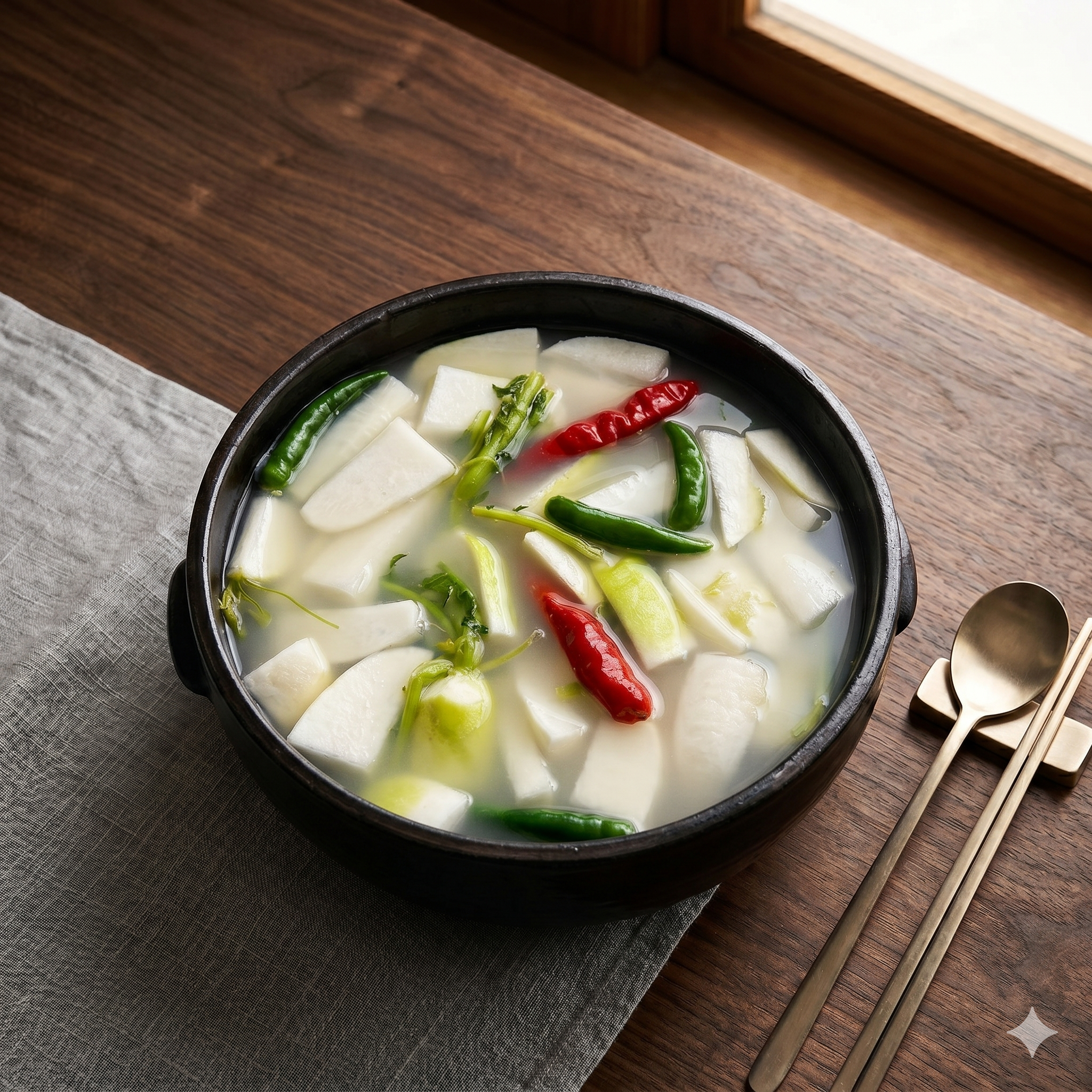
๋™์น˜๋ฏธ โ€” Dongchimi radish water kimchi ๋™์น˜๋ฏธ Dongchimi
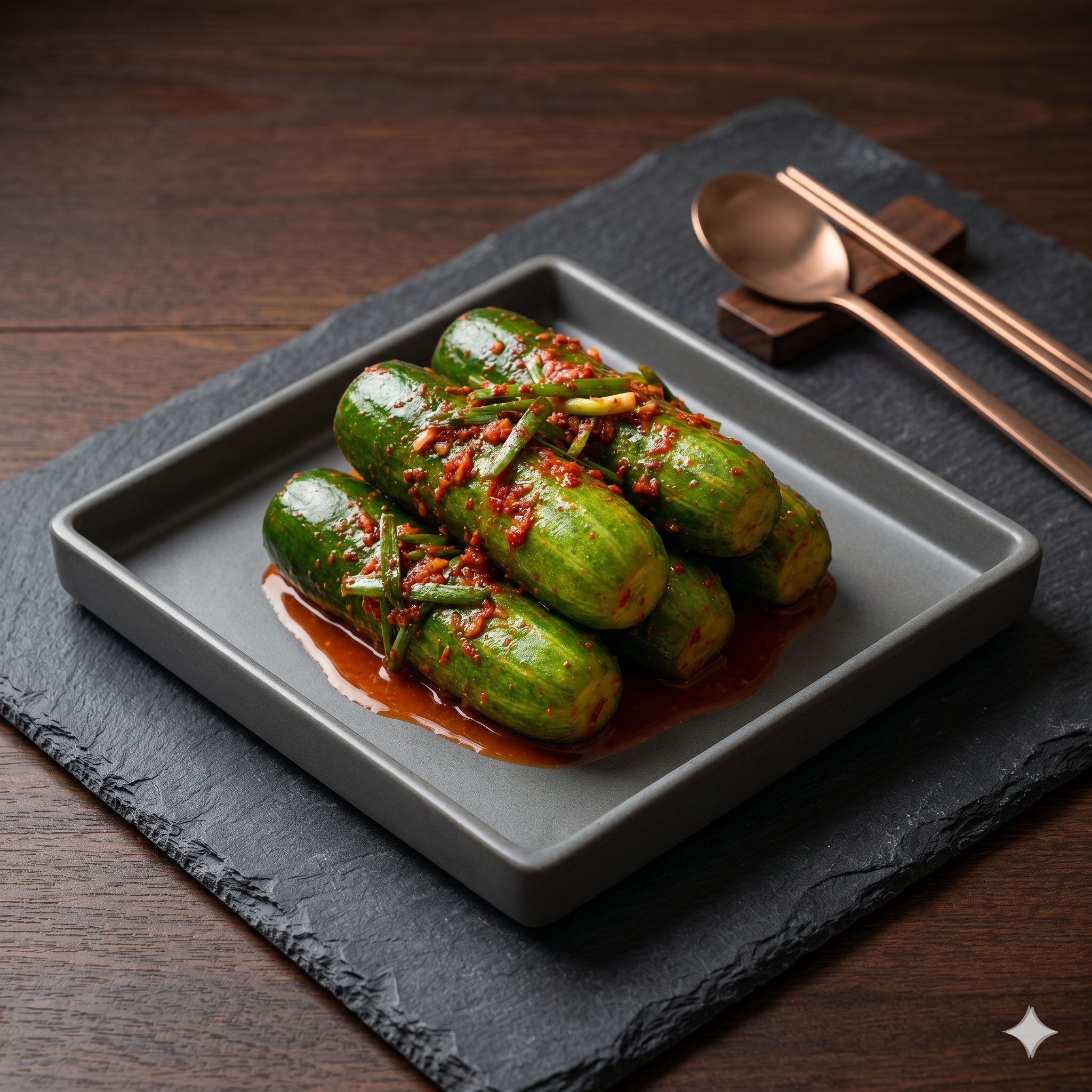
์˜ค์ด์†Œ๋ฐ•์ด โ€” Oi-sobagi stuffed cucumber kimchi ์˜ค์ด์†Œ๋ฐ•์ด Oi-sobagi

200๊ฐ€์ง€ ์ค‘ 3๊ฐ€์ง€ โ€” just three of 200+

NOT ALWAYS RED
Before chili peppers arrived, Koreans had been fermenting kimchi for roughly 2,000 years โ€” and it was white the whole time. The iconic red version has only existed for 400 years. The underdog won.
๊ณ ์ถ”๊ฐ€ ๋“ค์–ด์˜ค๊ธฐ ์ „ 2,000๋…„ ๋™์•ˆ ๊น€์น˜๋Š” ํ•˜์–€์ƒ‰์ด์—ˆ์Šต๋‹ˆ๋‹ค. ๋นจ๊ฐ„ ๊น€์น˜์˜ ์—ญ์‚ฌ๋Š” ๊ณ ์ž‘ 400๋…„.
IT COMES IN 200+ FORMS
Cucumber, radish, green onion, perilla leaf, water parsley โ€” there are over 200 types of kimchi across Korea, each shaped by region, season, and family tradition. You know one of them.
์˜ค์ด, ๋ฌด, ํŒŒ, ๊นป์žŽ, ์—ด๋ฌดโ€ฆ ์ „๊ตญ์— 200๊ฐ€์ง€๊ฐ€ ๋„˜๋Š” ๊น€์น˜. ๊ทธ ์ค‘ ๋‹น์‹ ์ด ์•„๋Š” ๊ฑด ์•„๋งˆ ํ•˜๋‚˜.
BEGINNER-FRIENDLY PICKS
Not into heat? Baek-kimchi has zero chili, dongchimi is a cold brothy radish kimchi, and kkakdugi sits at mild. The spectrum is wider than you think.
๋งต์ง€ ์•Š์€ ๊น€์น˜๋„ ์žˆ์Šต๋‹ˆ๋‹ค. ๋ฐฑ๊น€์น˜๋Š” ๊ณ ์ถ”๊ฐ€ ์ „ํ˜€ ์—†๊ณ , ๋™์น˜๋ฏธ๋Š” ์‹œ์›ํ•œ ๊ตญ๋ฌผ ์† ๋ฌด.
THE PROBIOTIC POWERHOUSE
Kimchi ferments into a probiotic powerhouse โ€” lactobacillus counts that rival the best supplements. In 2013, UNESCO added kimjang to its Intangible Cultural Heritage list.
๋ฐœํšจ ๊ณผ์ •์—์„œ ์œ ์‚ฐ๊ท ์ด ํญ๋ฐœ์ ์œผ๋กœ ์ฆ๊ฐ€ํ•ฉ๋‹ˆ๋‹ค. 2013๋…„ ์œ ๋„ค์Šค์ฝ” ์ธ๋ฅ˜๋ฌดํ˜•๋ฌธํ™”์œ ์‚ฐ ๋“ฑ์žฌ.
THE IMMUNITY DEBATE
The SARS-kimchi immunity rumor made international headlines โ€” but no peer-reviewed study ever backed it up. What is documented: a European team published a study during COVID-19 (Allergy, Wiley) showing a 35% correlation between fermented vegetable consumption and lower mortality rates. Correlation, not causation โ€” but kimchi is on scientists' radar.
์‚ฌ์Šค ๋•Œ "๊น€์น˜ ๋•๋ถ„์— ์•ˆ ๊ฑธ๋ ธ๋‹ค"๋Š” ์„ค์ด ํผ์กŒ์ง€๋งŒ, ๊ณผํ•™์  ๊ทผ๊ฑฐ๋Š” ์—†์Šต๋‹ˆ๋‹ค. ๋‹จ, ์ฝ”๋กœ๋‚˜19 ์‹œ๊ธฐ ์œ ๋Ÿฝ ์—ฐ๊ตฌํŒ€์ด ๋ฐœํšจ์ฑ„์†Œ ์†Œ๋น„๋Ÿ‰๊ณผ ์‚ฌ๋ง๋ฅ  ๊ฐ„ ์ƒ๊ด€๊ด€๊ณ„๋ฅผ ์‹ค์ œ ๋…ผ๋ฌธ(Allergy, Wiley)์œผ๋กœ ๋ฐœํ‘œํ–ˆ๊ณ , ๊ด€๋ จ ์—ฐ๊ตฌ๋Š” ์ง€๊ธˆ๋„ ์ง„ํ–‰ ์ค‘์ž…๋‹ˆ๋‹ค.
์™ธ๊ตญ์ธ์„ ์œ„ํ•œ ๊น€์น˜ ์ž…๋ฌธ ๋กœ๋“œ๋งต โ€” The Kimchi Beginner's Roadmap.
๋งค์šด ๊ฑธ ๋ชป ๋จน์–ด๋„ ๊ดœ์ฐฎ์Šต๋‹ˆ๋‹ค. ์—ฌ๊ธฐ์„œ๋ถ€ํ„ฐ ์‹œ์ž‘ํ•˜์„ธ์š”. You don't have to start with the spicy stuff.
๐Ÿค
STEP 1
์ „ํ˜€ ์•ˆ ๋งค์šด ๊น€์น˜ ยท Zero Heat
๐ŸŒถ๏ธ 0 / 5
๋ฐฑ๊น€์น˜ ยท Baek-kimchi
๐ŸŒถ๏ธ 0/5 โ€” White Kimchi
๊ณ ์ถ”๊ฐ€ ํ•œ ํ†จ๋„ ์—†์Šต๋‹ˆ๋‹ค. ๋ฐฐ, ๋งˆ๋Š˜, ์ƒ๊ฐ•, ์ชฝํŒŒ๋กœ๋งŒ ๋งŒ๋“  ํ•˜์–€ ๊น€์น˜. '๊น€์น˜์ธ๋ฐ ์ด๊ฒŒ ๋ง›์žˆ์–ด?'๊ฐ€ ๋‚˜์˜ค๋Š” ์ˆœ๊ฐ„.
No chili, no heat โ€” at all. Made with pear, garlic, ginger, and green onion. First reaction: "Wait, this is actually really good?"
๋™์น˜๋ฏธ ยท Dongchimi
๐ŸŒถ๏ธ 0/5 โ€” Water Kimchi
๋ฌด๋ฅผ ํ†ต์งธ๋กœ ์†Œ๊ธˆ๋ฌผ์— ๋‹ด๊ทผ ๊ฒจ์šธ ๊น€์น˜. ์‹œ์›ํ•˜๊ณ  ์ฒญ๋Ÿ‰ํ•œ ๊ตญ๋ฌผ์ด ํ•ต์‹ฌ. ๋ƒ‰๋ฉด ์œก์ˆ˜๋กœ๋„ ์“ฐ์ž…๋‹ˆ๋‹ค.
Whole radishes in cold, lightly fermented brine. The broth is the star โ€” clean, refreshing, slightly tangy. Kimchi in liquid form.
โ†“
๐Ÿงก
STEP 2
์•ฝ๊ฐ„ ๋งค์šด ๊น€์น˜ ยท Mild Heat
๐ŸŒถ๏ธ 2 / 5
๊น๋‘๊ธฐ ยท Kkakdugi
๐ŸŒถ๏ธ 2/5 โ€” Radish Cube Kimchi
๋ฌด๋ฅผ ๊น๋‘‘์ฐ๊ธฐํ•œ ์•„์‚ญํ•œ ๊น€์น˜. ๋ฐฐ์ถ”๊น€์น˜๋ณด๋‹ค ํ›จ์”ฌ ๋œ ๋งต์Šต๋‹ˆ๋‹ค. ์„ค๋ ํƒ•ยท๊ณฐํƒ•์˜ ๋‹จ์ง.
Radish cut into cubes, lightly seasoned. Crunchier and milder than cabbage kimchi. Try this one first at Korean restaurants.
์˜ค์ด์†Œ๋ฐ•์ด ยท Oi-sobagi
๐ŸŒถ๏ธ 2/5 โ€” Stuffed Cucumber Kimchi
์˜ค์ด์— ๋ถ€์ถ” ์†Œ๋ฅผ ์ฑ„์šด ์—ฌ๋ฆ„ ๊น€์น˜. ์•„์‚ญํ•˜๊ณ  ๊ฐ€๋ณ๊ณ  ์ƒํผํ•ฉ๋‹ˆ๋‹ค. ์™ธ๊ตญ์ธ์ด ์ฒ˜์Œ "์ด๊ฑฐ ๋ง›์žˆ๋‹ค"๋ผ๊ณ  ๋งํ•˜๋Š” ๊น€์น˜ 1์ˆœ์œ„.
Cucumber stuffed with chive filling. Crisp, light, summer-only. Consistently the kimchi that converts skeptics.
โ†“
โค๏ธ
STEP 3
์ง„์งœ ๋„์ „ ยท When You're Ready
๐ŸŒถ๏ธ 3~4 / 5
๊ฒ‰์ ˆ์ด ยท Geotjeori
๐ŸŒถ๏ธ 3/5 โ€” Fresh Cabbage Kimchi
๊ฐ“ ๋‹ด๊ทผ ๋ฐฐ์ถ”๊น€์น˜. ๋ฐœํšจ ์ „์ด๋ผ ๋œ ์‹œ๊ณ , ๋” ์•„์‚ญํ•ฉ๋‹ˆ๋‹ค. ์ˆ™์„ฑ ๋ฐฐ์ถ”๊น€์น˜๋กœ ๊ฐ€๊ธฐ ์ „ ๋งˆ์ง€๋ง‰ ํ›ˆ๋ จ.
Freshly made cabbage kimchi, not yet fermented. Less sour, more crunch. Training wheels for the full experience.
๋ฐฐ์ถ”๊น€์น˜ ยท Baechu-kimchi
๐ŸŒถ๏ธ 3~4/5 โ€” The Original
๊ทธ๋ฆฌ๊ณ  ๋งˆ์นจ๋‚ด, ์ด๊ฒƒ. ์ˆ™์„ฑ ์ •๋„์— ๋”ฐ๋ผ ๋ง›์ด ์™„์ „ํžˆ ๋‹ฌ๋ผ์ง‘๋‹ˆ๋‹ค. ๊นŠ๊ณ  ๋ฐœํšจ๋œ ๋ฌต์€์ง€๋Š” ๊ณ ์ˆ˜๋“ค์˜ ์˜์—ญ.
Fermentation changes everything โ€” young kimchi is bright and punchy, aged kimchi (mukeunji) is deep, sour, almost wine-like. By now, you're not a beginner.
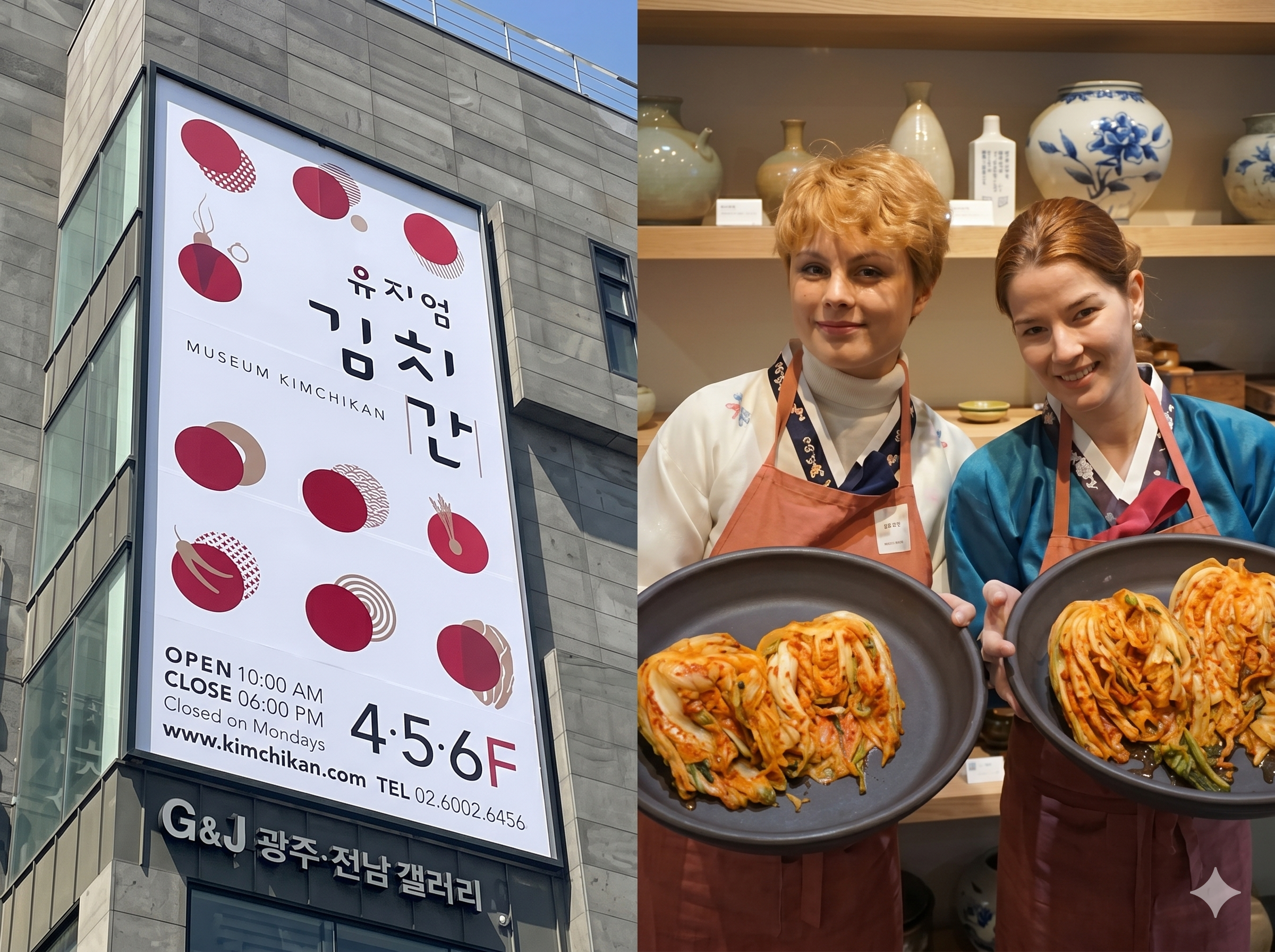
์„œ์šธ์—์„œ ๊ฒฝํ—˜ํ•˜๊ธฐ ยท Where to Experience in Seoul
๐Ÿ“ Jongno ยท ์ข…๋กœ
๊ด‘์žฅ์‹œ์žฅ
Gwangjang Market ยท ์ฐฝ๊ฒฝ๊ถ๋กœ 88
์‹œ์žฅ ์•ˆ ๊น€์น˜ ๊ฐ€๊ฒŒ์—์„œ ์ง์ ‘ ๋‹ด๊ทผ ๊ฐ์ข… ๊น€์น˜ ๊ตฌ๋งค ๋ฐ ์‹œ์‹ ๊ฐ€๋Šฅ. ํ˜„์ง€์ธ์˜ ๋ƒ‰์žฅ๊ณ ๋ฅผ ๋“ค์—ฌ๋‹ค๋ณด๋Š” ๋А๋‚Œ. Market vendors sell their own homemade kimchi โ€” most will let you try before you buy.
๊ฐ€๊ฒฉ โ‚ฉ ยท ์˜์–ด ๋ฉ”๋‰ด ์—†์Œ, ์†๊ฐ€๋ฝ์œผ๋กœ OK
๐Ÿ“ Gyeongbokgung ยท ๊ฒฝ๋ณต๊ถ ๊ทผ์ฒ˜
ํ† ์†์ดŒ ์‚ผ๊ณ„ํƒ•
Tosokchon Samgyetang ยท ์ฒด๋ถ€๋™
์‚ผ๊ณ„ํƒ•๋„ ํ›Œ๋ฅญํ•˜์ง€๋งŒ, ํ•จ๊ป˜ ๋‚˜์˜ค๋Š” ๋ฐฑ๊น€์น˜์™€ ๊น๋‘๊ธฐ๊ฐ€ ๋‹จ์—ฐ ๋ช…ํ’ˆ. Come for the ginseng chicken soup, stay for the side dishes. Textbook examples of the mild end of the spectrum.
๊ฐ€๊ฒฉ โ‚ฉโ‚ฉ ยท ์˜์–ด ๋ฉ”๋‰ด โœ“ ยท 10:00~22:00
์ด ์‹œ๋ฆฌ์ฆˆ์˜ ๋‹ค๋ฅธ ๊ธ€ ยท Series Navigation
v1  ยท  ๊น€์น˜ โ€” ์›์กฐ (์ง€๊ธˆ ์ฝ๋Š” ์ค‘)
v2  ยท  ๊น€์น˜์ฐŒ๊ฐœ โ†’ /fermented/kimchi-jjigae ยท coming soon
v3  ยท  ๋น„๊ฑด ๊น€์น˜ โ†’ /fermented/kimchi-vegan ยท coming soon
๋‹ค์Œ ํŽธ ์˜ˆ๊ณ  โ†’ ๋œ์žฅ (Doenjang) โ€” ๋ฏธ์†Œ์™€ ๋น„๊ตํ•˜์ง€ ๋งˆ์„ธ์š”. ๋œ์žฅ์€ ํ›จ์”ฌ ์˜ค๋ž˜๋๊ณ , ๋” ๊นŠ์Šต๋‹ˆ๋‹ค. ๐Ÿซ™
Next up โ†’ Doenjang. Older than miso. Deeper than anything you've tried.
"๊น€์น˜" = Gim-chi  โ€”  G sounds like the G in "give", chi like the "chi" in "champion"
ํ•œ๊ตญ์—์„œ ์‚ฌ์ง„ ์ฐ์„ ๋•Œ "Cheese!" ๋Œ€์‹  "๊น€์น˜!"๋ผ๊ณ  ์™ธ์นฉ๋‹ˆ๋‹ค. ์ด์ œ ๊ทธ ์ด์œ ๋ฅผ ์•Œ๊ฒ ์ฃ ?
In Korea, you don't say "Cheese!" for photos. You say "Kimchi!" โ€” Now you know why.
#๊น€์น˜ #ํ•œ๊ตญ์Œ์‹ #KFoodStories #KoreanFood #Kimchi #FermentedFood #KoreanCuisine #VisitKorea
More in fermented and preserved
gejang
Read Article โ†’
kfood jang overview v1
Read Article โ†’
STAY CONNECTED

The Story Continues.

Join our newsletter to receive the latest explorations into Korean gastronomy, culture, and untold histories directly in your inbox.

We respect your inbox. No spam, just stories.